Important note
This content is for informational purposes only and is not medical advice. Always verify labels, ingredients, and cross-contact risk for your family's needs.
Why Calcium Is Essential for Growing Children
Calcium is vital for building and maintaining strong bones and teeth, supporting healthy muscle contractions, enabling proper nerve signalling, and aiding blood clotting. Around 99% of the body's calcium is stored in bones and teeth, making childhood and adolescence - the periods of peak bone growth - the most critical windows for adequate intake. The American Academy of Pediatrics (AAP) confirms that building strong bone density during childhood significantly reduces the risk of osteoporosis in later life.
How Much Calcium Does Your Child Need?
Calcium requirements change significantly with age. The following daily targets are based on AAP and Institute of Medicine guidelines, also consistent with NHS recommendations:
- Ages 1–3: 700 mg per day
- Ages 4–8: 1,000 mg per day
- Ages 9–18: 1,300 mg per day
Adolescence is the single most important period for calcium intake. Bone mass peaks around ages 18–25, making teenage years a critical window for protecting against future fractures and osteoporosis.
Dairy Sources of Calcium
For children without milk allergies or lactose intolerance, dairy remains among the most bioavailable sources of calcium:
- Milk: approximately 300 mg per 200 ml glass
- Yoghurt: approximately 300–400 mg per 150 g pot
- Hard cheese: approximately 200–300 mg per 30 g serving
Non-Dairy & Allergy-Friendly Calcium Sources
Many families - whether due to milk allergy, lactose intolerance, vegan diet, or religious dietary laws - need reliable non-dairy calcium options. Here are some of the best, with amounts per serving based on the NHS Calcium Counts guide:
- Tahini (sesame paste): ~130 mg per 2 tablespoons - outstanding calcium density, a staple in Mediterranean cooking
- Tinned sardines with bones: ~325 mg per 85 g - the soft bones are edible and an excellent source of calcium
- Tinned salmon with bones: ~180 mg per 85 g
- Fortified oat milk: ~300–350 mg per 200 ml (check the label for calcium-fortified varieties)
- Fortified almond milk: ~300–450 mg per 200 ml (check the label)
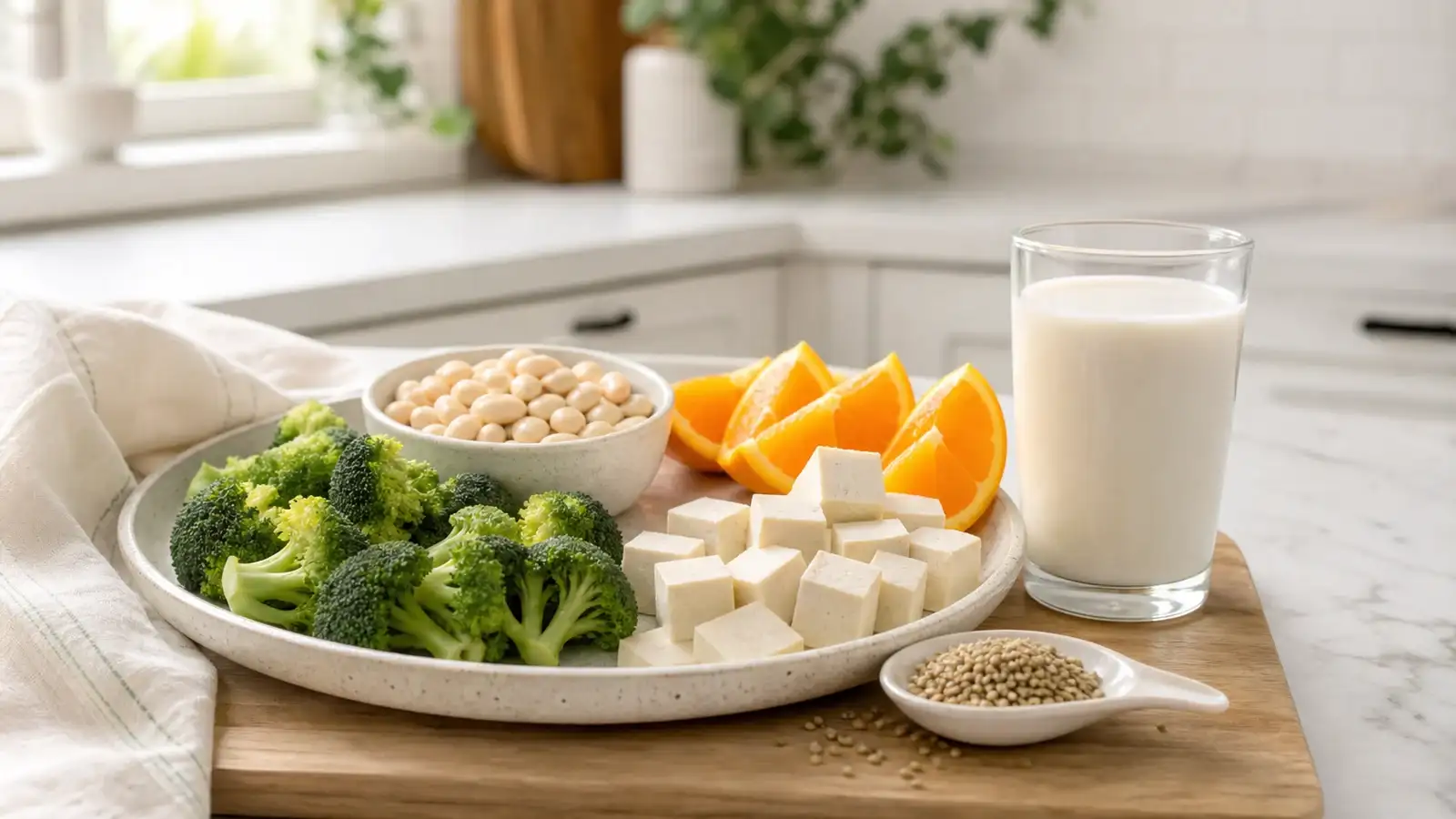
- Tofu made with calcium sulphate: ~200–400 mg per 100 g - protein-rich and a good pareve option
- White beans (cannellini): ~130 mg per 100 g cooked
- Broccoli: ~45 mg per 80 g cooked - modest but bioavailable and easily accepted by children
- Kale: ~100 mg per 80 g cooked
- Edamame: ~100 mg per 80 g
Kosher Families: Calcium on Meat Meals
In kosher households, dairy products cannot be served alongside meat. This presents a practical calcium challenge, but one that is fully manageable with pareve (neither meat nor dairy) calcium-rich foods:
- Tahini as a sauce or dip - a natural pairing with meat dishes in Israeli cuisine
- Tinned sardines or salmon with bones as a starter or side
- Fortified plant milks (oat, almond, rice) in cooking and baking
- Tofu with calcium sulphate in soups and stir-fries
- White beans in casseroles and stews
Vitamin D: Calcium's Essential Partner
Calcium cannot be absorbed effectively without adequate Vitamin D. Children need Vitamin D to transport calcium from food into the bloodstream and into bones. Key sources include:
- Sunlight (15–20 minutes of midday sun - though this varies significantly by season and latitude in the UK)
- Oily fish (salmon, sardines, mackerel)
- Egg yolks
- Fortified plant milks and breakfast cereals
The NHS recommends that all children aged 1–4 take a daily Vitamin D supplement of 10 micrograms, and that babies under 1 receive 8.5–10 micrograms daily unless drinking 500 ml or more of formula milk. Always confirm supplement needs with your GP or health visitor.
Mediterranean Eating: Naturally Calcium-Rich
Mediterranean cuisine is naturally rich in non-dairy calcium sources. Tahini-based sauces, labneh, sardines, white beans, and abundant leafy greens are everyday staples of this eating tradition. For families cooking in the Mediterranean style, meeting calcium needs through everyday cooking is both practical and delicious.
This content is for informational purposes only and does not constitute medical advice. Always consult your child's pediatrician before making dietary changes.
--- **Disclaimer:** This guide is for informational purposes only and does not constitute medical or nutritional advice. Allergen information is a general guide only - cross-contamination in home kitchens cannot be guaranteed. Always consult a qualified allergist or healthcare provider before dietary changes. pashutFree is not liable for adverse health events resulting from use of this content.Frequently asked questions
How can a child with a dairy allergy get enough calcium?
Children with dairy allergies can meet calcium needs through tahini (130 mg per 2 tbsp), tinned sardines with bones (325 mg per serving), calcium-fortified plant milks like oat or almond milk (300–450 mg per cup), white beans, kale, and tofu made with calcium sulphate. Consult your GP or paediatrician about supplementation.
How much calcium does a 5-year-old need each day?
Children aged 4–8 need 1,000 mg of calcium per day, according to AAP and Institute of Medicine guidelines, which are broadly consistent with NHS recommendations. This can be met through a combination of dairy and non-dairy sources spread across meals and snacks throughout the day.
Why is vitamin D important for children's calcium absorption?
Vitamin D acts as the essential carrier that enables calcium absorption in the gut. Without sufficient Vitamin D, the body cannot effectively move calcium from food into the bloodstream and bones - even if dietary calcium intake is adequate. The NHS recommends daily Vitamin D supplements for all children aged 1–4.