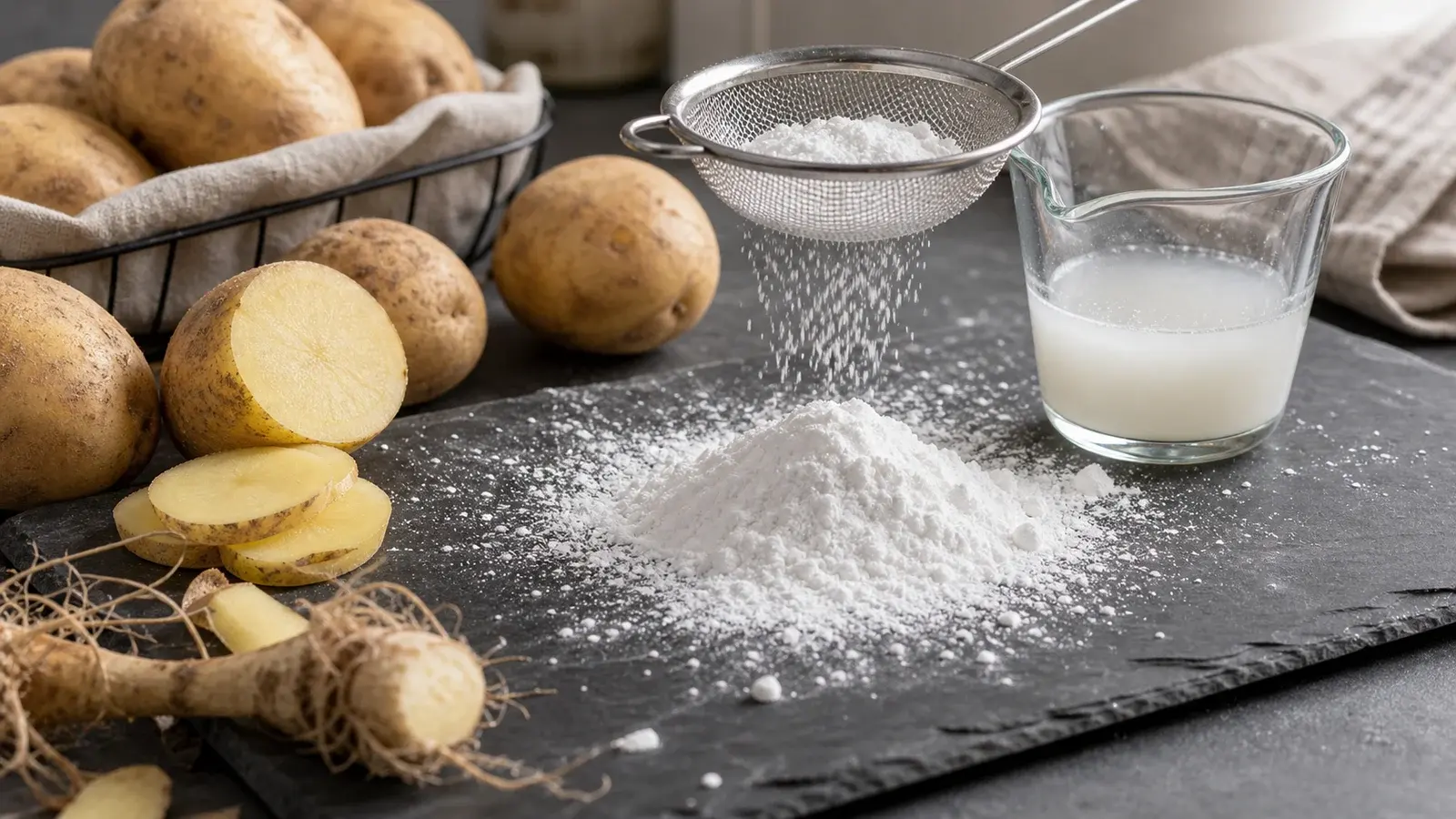
potato starch gluten-free baking
Potato Starch
Potato starch is extracted from potatoes (Solanum tuberosum) by washing and grinding raw potatoes to release the starch granules, then separating, washing, and drying the starch into a very fine, brilliantly white powder. It is important to distinguish potato starch from potato flour — they are very different products. Potato flour is made from whole dehydrated potatoes and has a strong potato flavour; potato starch is the refined starch only, with a completely neutral taste. Potato starch has the largest granule size of all common culinary starches, which gives it unique properties: it gelatinizes quickly, creates a very light and airy texture in baked goods, and retains moisture exceptionally well — producing baked goods that stay moist for longer than those made with rice flour alone. This moisture-retaining quality is a prized characteristic in GF baking, where dryness and crumbliness are constant challenges. In Jewish Ashkenazi cooking, potato starch has been used for generations as the primary thickener and "flour" in Passover baking (when leavened wheat flour is prohibited), a tradition that has generated a rich repertoire of potato starch-based cakes and pastries that are naturally GF.
What is it?
Potato starch is pure refined starch from the potato. It is grain-free, gluten-free, nut-free, dairy-free, and naturally vegan. Nutritionally, it is primarily a source of carbohydrates with minimal fibre, protein, or micronutrients (similar to other refined starches). However, when the cooked starch is cooled, a portion converts to resistant starch — a form with prebiotic properties and a lower glycemic impact than digestible starch. Potato starch has a relatively high swelling power when heated (it absorbs water and expands dramatically), which is why it creates such a light, airy texture and why baked goods made with it stay soft longer than rice-flour-based goods.
How to use
- In GF flour blends: Use potato starch at 20–30% of a GF flour blend. Classic blend: 2 cups rice flour + ⅔ cup potato starch + ⅓ cup tapioca starch. - Cakes and cupcakes: Higher potato starch proportion (25–30% of blend) produces a lighter, more tender crumb. - Bread: 15–25% potato starch in a GF bread blend contributes moisture retention and softness. - Muffins and quick breads: Excellent at 20–25%; the finished product stays moist significantly longer. - Thickening gravies and sauces: Use 1 tbsp potato starch per cup of liquid — produces a glossy, stable sauce that holds well even in acidic conditions (unlike some starches that thin out). - Crispy coatings: Potato starch (sometimes mixed with rice flour) creates exceptionally crispy fried coatings, popular in Korean fried chicken (dakgangjeong). Important: Do not substitute potato starch for potato flour or vice versa — they behave completely differently.
Substitutes
| Substitute | Ratio | Notes |
|---|---|---|
| Tapioca starch | 1:1 | Best substitute; similar lightening effect; slightly chewier |
| Arrowroot starch | 1:1 | Very similar; produces clear sauces; lower heat stability |
| Cornflour | 1:1 | Most accessible swap; slightly denser result in baking |
| Rice starch | 1:1 | Similar refined starch; harder to find |
| Sweet rice flour | ¾:1 | Stickier, slightly chewier texture |
Safety notes
⚠️ Nightshade Sensitivity: Potato is a member of the Solanaceae (nightshade) family. While nightshade sensitivities are controversial in mainstream medicine, some individuals with autoimmune conditions or self-reported nightshade sensitivity choose to avoid potato products. For these individuals, tapioca starch or arrowroot are effective substitutes. ⚠️ Cross-contamination: Potato starch is naturally gluten-free, but packaging facilities may process wheat starches on shared equipment. For coeliac safety, choose certified gluten-free potato starch. Bob's Red Mill and Manischewitz produce widely trusted certified GF options. ⚠️ Do Not Confuse with Potato Flour: Potato flour and potato starch are entirely different products. Potato flour has a strong potato flavour and very different behavior in baking — substituting one for the other will ruin a recipe. Always verify you have potato starch (fine, bright white, silky) not potato flour (yellowish, coarser, aromatic). ⚠️ High Glycemic Index: Like most refined starches, potato starch has a high glycemic index in its digestible form. It is best used as a blending ingredient with higher-fibre, higher-protein GF flours rather than as a primary flour for those monitoring blood sugar. UK label check (Food Standards Agency): This ingredient is not itself one of the 14 allergens that UK law requires to be emphasised, but a packaged product can contain other ingredients or carry a specific precautionary statement. Read the full pack every time and assess cross-contact according to your own needs; no label wording is a medical guarantee.
Where to buy
UK buying guide: Search for “potato starch (not potato flour)”. Check the free-from or home-baking sections of major UK supermarkets such as Tesco, Sainsbury's, Waitrose, Morrisons and Ocado. Less common flours and binders may be easier to find through specialist retailers such as Holland & Barrett, Planet Organic, Grape Tree or Real Foods; relevant South Asian or East Asian food shops may use a different product name. Availability and formulations change. Before buying, read the complete ingredients list, any emphasised allergens and any specific ‘may contain’ statement; do not rely on an old pack or a retailer category alone.
Some product links may be affiliate links when a valid partner ID is configured. Always verify ingredients and labels before buying.
Storage
Store in an airtight container in a cool, dry place. Potato starch has an excellent shelf life of 2–3 years when kept away from moisture and heat. It is particularly prone to absorbing moisture from the air, which causes clumping. Keep the container tightly sealed and use a dry scoop. Freezing is effective for very long-term storage.
FAQ
What is the difference between potato starch and potato flour?
Potato starch is refined pure starch — white, silky, with no flavour. Potato flour is made from whole cooked and dried potatoes — it is yellowish, has a distinct potato flavour, and absorbs much more liquid. They are not interchangeable. In GF baking, potato starch is used in small quantities in blends to lighten texture; potato flour is used in small amounts to add flavour and moisture to breads.
Can potato starch replace cornflour in thickening?
Yes, at a 1:1 ratio. Potato starch produces a very similar glossy, stable thickened sauce. It may produce a very slightly different texture than cornflour but works well in most savoury sauce applications. Note that potato starch is more heat-stable than arrowroot (it doesn't break down as quickly) but slightly less stable than cornflour under prolonged high heat.
Is potato starch Passover kosher?
Yes. Potato starch has been a staple of Kosher for Passover cooking for generations, as it does not derive from any of the five grains prohibited during Passover. It is widely available in Kosher-certified form and is the traditional thickener in many traditional Ashkenazi Passover recipes.
Does potato starch help GF baked goods stay fresh longer?
Yes. Potato starch's moisture-retaining properties help GF baked goods resist the staling and drying that is a common complaint with rice flour-heavy recipes. Breads and cakes with potato starch in the blend tend to stay moist and tender for an extra day or two compared to those without it.
Can I use potato starch to make crispy fried food?
Yes — potato starch is exceptional for crispy frying. It creates a thin, glass-like crust on fried proteins and vegetables. Many Korean and Chinese deep-frying techniques use potato starch (or potato starch blended with rice flour) specifically for its superior crispiness and the way it maintains crunch even after saucing.