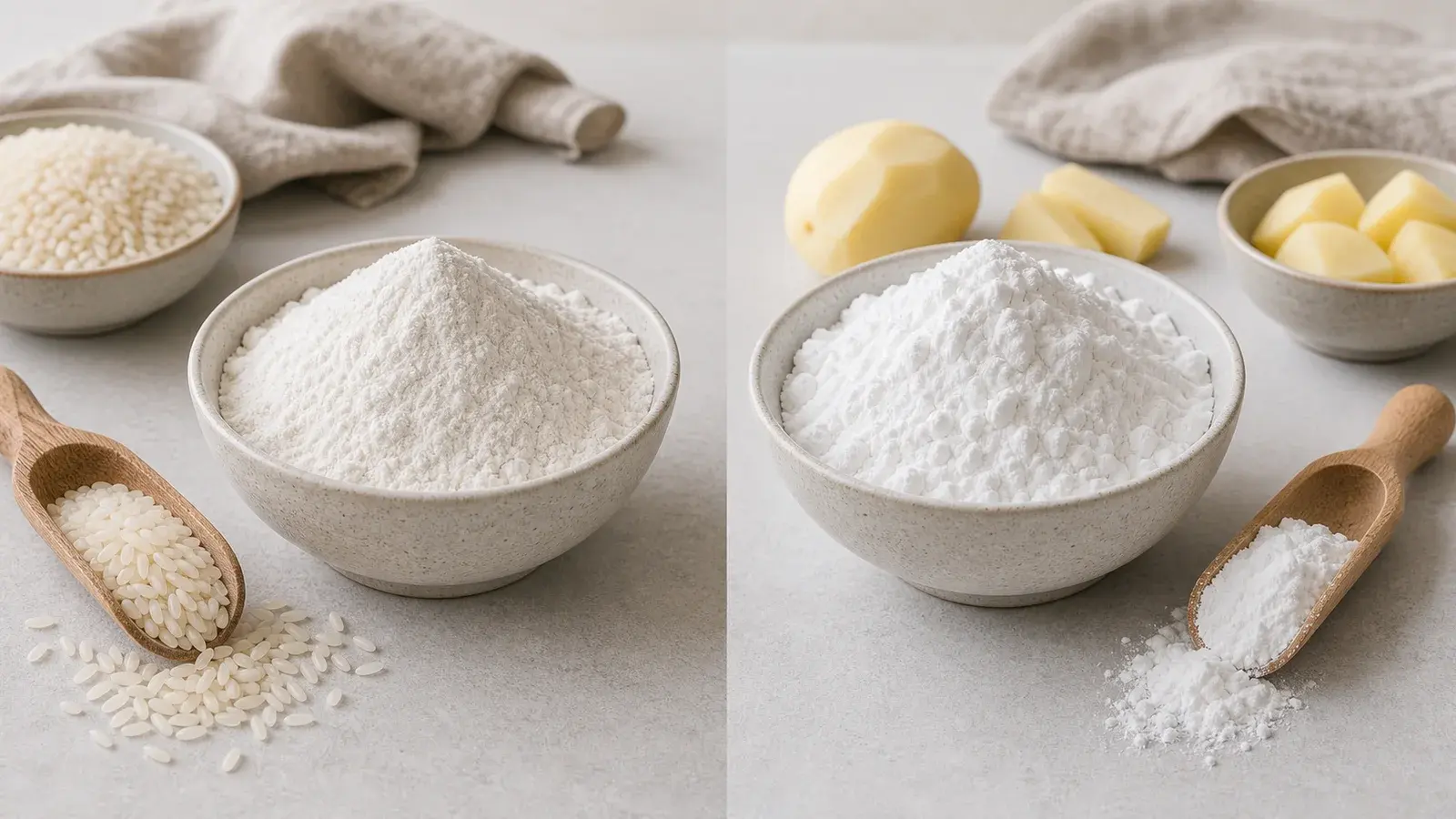
rice flour vs potato starch gluten free
Rice Flour vs Potato Starch: When to Use Each in GF Cooking
Rice flour vs potato starch — when to use each in gluten-free cooking and baking. Textures, ratios, best recipes, and allergy safety notes explained.
Rice flour and potato starch are both gluten-free pantry staples, but they are not interchangeable. One is a whole-grain flour with structure and nutrition; the other is a refined starch used primarily for lightness and thickening. Knowing when to reach for each one will dramatically improve the texture of your gluten-free cooking and baking.
Quick Comparison
| Property | Rice Flour | Potato Starch |
|---|---|---|
| Made from | Ground whole or white rice | Extracted starch from potatoes |
| Gluten-free | Yes | Yes |
| Texture contribution | Slightly gritty, dense crumb | Light, airy, soft |
| Best use | Cookies, noodles, coating | Lightening baked goods, thickening |
| Absorption | Moderate | Very high |
| Flavor | Mild, slightly grainy | Neutral |
What Is Rice Flour?
Rice flour is made by milling dried rice into a fine powder. It comes in two main varieties:
- White rice flour: Ground from milled white rice. The most common type in GF baking — it has a mild flavor and a slightly gritty texture that can be smoothed out by fine milling or using in combination with other flours.
- Brown rice flour: Ground from whole-grain brown rice. It's nuttier, denser, and higher in fiber and nutrients. It's more popular in health-conscious baking and adds a heartier flavor.
Rice flour is one of the most widely used GF flours precisely because it's relatively neutral in flavor and works in many applications: cookies, cakes, tempura batter, rice noodles, and rice paper all use rice flour as a base.
On its own, rice flour can produce a slightly gritty texture in baked goods. Fix this by using super-fine milled rice flour or combining it with a starch (potato starch or tapioca) in a GF blend.
Popular brands: Bob's Red Mill Brown/White Rice Flour, Anthony's White Rice Flour, Authentic Foods Super-Fine Rice Flour
Best uses:
- GF flour blends (typically 40–60% of the blend)
- Gluten-free pasta and noodles
- Tempura and crispy coatings
- Rice cookies and shortbread
What Is Potato Starch?
Potato starch is extracted from raw potatoes — the starch is washed out, dried, and sold as a fine, white, silky powder. It should not be confused with potato flour, which is made from whole dried potatoes and has a much stronger potato flavor and very different baking properties.
Potato starch's superpower in GF baking is its ability to add lightness and moisture retention. It creates a tender, soft crumb and helps baked goods stay moist longer than rice flour alone. Because of this, it is almost always used in combination with rice flour in GF blends — typically at 15–30% of the total flour weight.
As a standalone thickener, potato starch is similar to cornstarch but tolerates freezing slightly better (cornstarch-thickened sauces can become watery when frozen and reheated; potato starch holds up better).
Popular brands: Bob's Red Mill Potato Starch, Anthony's Potato Starch, NOW Foods Potato Starch
Best uses:
- GF flour blends to add lightness
- Thickening soups, gravies, and sauces
- Crispy coatings and pan-fried dishes
- Keeping cakes and muffins moist
Classic GF Flour Blend Using Both
A reliable all-purpose GF blend: 2 cups white rice flour + ⅔ cup potato starch + ⅓ cup tapioca starch. This works well in most cookies, cakes, and quick breads.
Can You Substitute One for the Other?
Rice flour → Potato starch: Not directly. Rice flour provides structure; potato starch mainly provides lightness and moisture. Replacing rice flour entirely with potato starch will give you an overly dense, starchy result.
Potato starch → Rice flour: Also not a great swap. Potato starch absorbs significantly more liquid than rice flour and lacks the structural flour component. As a thickener, you can use rice flour, but it produces a cloudy, slightly grainy sauce compared to the clear gel of potato starch.
They complement each other beautifully in a blend — use rice flour as the structural base and potato starch to lighten and soften.
⚠️ Safety Notes for Celiacs and Allergy Sufferers
- Both are naturally gluten-free, but cross-contamination during milling is a real risk. Choose products with a certified gluten-free label, especially for celiac disease.
- Potato allergy is uncommon but exists. If you have a known nightshade sensitivity, discuss potato starch use with your healthcare provider.
- Rice flour vs potato flour: Don't confuse potato starch with potato flour — they are very different products. Potato flour has a strong flavor and is used in very small quantities; substituting the wrong one can ruin a recipe.
- People on low-starch diets or managing blood sugar should note that potato starch is a rapidly digestible carbohydrate with a high glycemic index.
Where to Buy
- Amazon US: Shop rice flour and potato starch on Amazon
- Amazon UK: Shop GF flours and starches on Amazon UK
- iHerb: Browse certified GF rice flour on iHerb
Conclusion
Rice flour and potato starch each fill a specific role in gluten-free cooking. Use rice flour as the primary structural flour in baked goods, noodles, and coatings. Use potato starch to lighten textures, retain moisture, and thicken sauces and gravies. Their greatest strength is together — combined in a well-designed GF flour blend, they produce results that come remarkably close to traditional wheat-based baking.
Frequently Asked Questions
Q: Can I use rice flour to thicken a sauce? Yes, but it produces a slightly cloudy, somewhat grainy sauce compared to the smooth, glossy result from potato starch or cornstarch. For thickening, mix 1 tablespoon of rice flour with 2 tablespoons of cold water before adding to your sauce. Heat slowly to avoid lumps. It works best in rustic stews and soups where clarity isn't a concern.
Q: What is the difference between potato starch and potato flour? These are completely different ingredients. Potato starch is a fine, white, neutral-tasting powder extracted from raw potatoes; it's used in small amounts to add lightness. Potato flour is made from whole, cooked, dried potatoes ground into a dense powder with a strong potato flavor; it's used in tiny quantities in bread baking. Never swap them 1:1.
Q: Why is my gluten-free cake gritty? Can rice flour cause this? Yes. A gritty texture is the most common complaint about rice flour, caused by coarser grinding. The fix: use super-fine milled rice flour (Authentic Foods is a trusted brand for this), or add a portion of tapioca starch or potato starch to your blend, which smooths out the texture significantly.
Q: Is potato starch safe for people with celiac disease? Potato starch is naturally gluten-free, but like all GF products, it can be cross-contaminated during processing. Choose a brand with certified gluten-free certification. Bob's Red Mill and Anthony's both offer certified potato starch.
Q: How much potato starch should I add to a gluten-free flour blend? Aim for 20–25% potato starch by weight. Too much (over 30%) makes baked goods gummy. A standard starting blend: 2 cups rice flour + ½ cup potato starch + ¼ cup tapioca starch.