AuthorpashutFree Editorial Team
Last updated2026-05-31
Medical disclaimer
In-depth read: 10–15 minutesThis information is for culinary and general health education only. It is not a diagnosis, treatment plan, personalized medical advice, or a substitute for a physician, allergist, gastroenterologist, registered dietitian, qualified rabbinical authority, or school health plan. For severe allergy, suspected celiac disease, new symptoms, or dietary changes for children, use licensed professional guidance and an individualized emergency plan.
Introduction
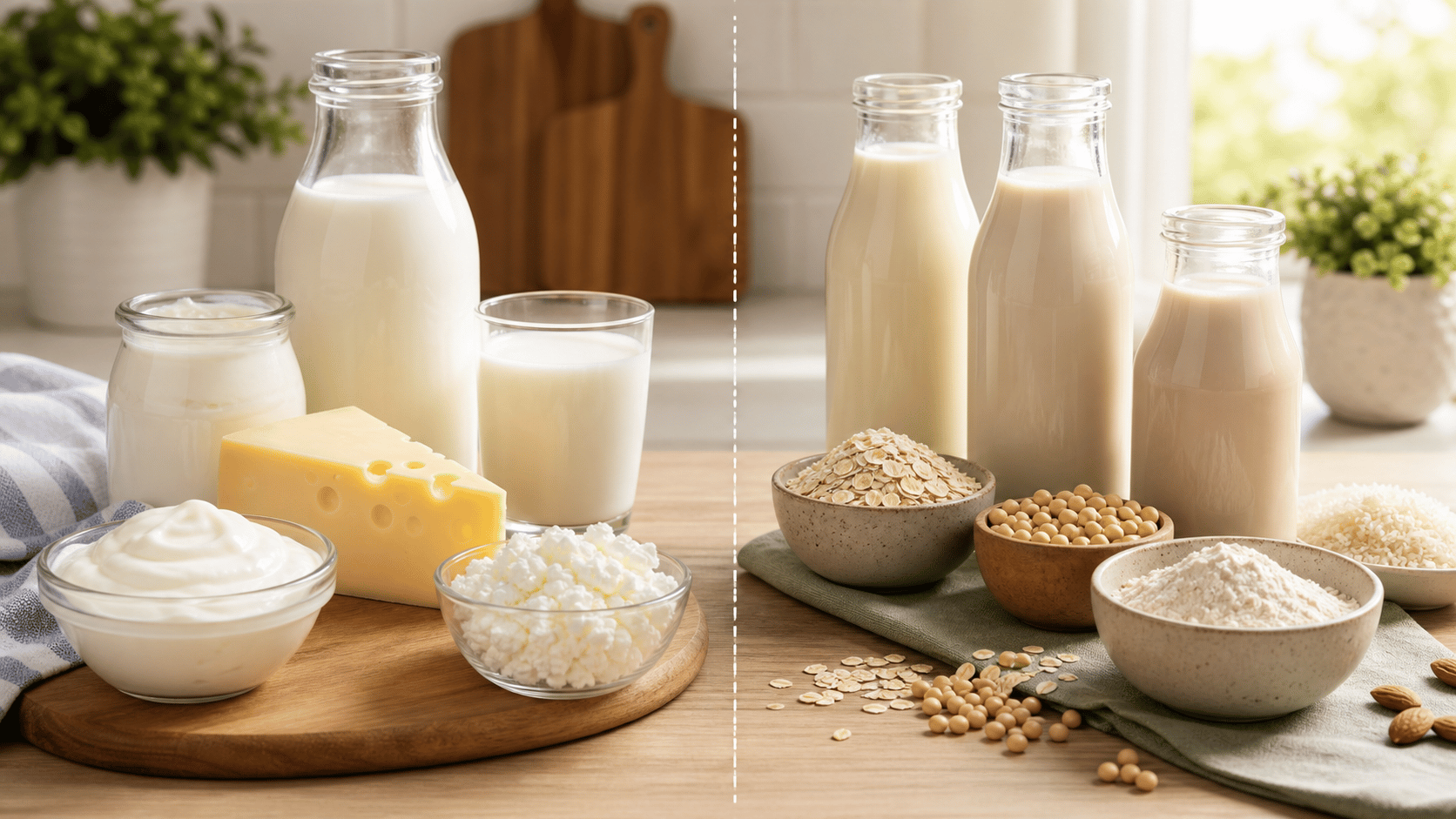
Milk Allergy vs. Lactose Intolerance is where allergy-safe cooking often gets confusing, because dairy-free, milk-free, lactose-free, vegan, and pareve are used as if they mean the same thing. They do not. Mayo Clinic – Milk Allergy describes milk allergy as an immune reaction to milk proteins, while NIDDK – Lactose Intolerance describes lactose intolerance as difficulty digesting lactose, the sugar in milk.
That difference changes the kitchen workflow. A lactose-free dairy product may still contain milk proteins and may not fit a person with milk allergy. A vegan product avoids animal-derived dairy but may contain nuts, soy, gluten, sesame, or facility warnings. A pareve product is a kosher category, not an allergy-safety guarantee.
A parent or home cook needs safer language, better substitutes, and more reliable recipe decisions. This is not diagnosis; it is the bridge between medical categories and everyday cooking.
For a family kitchen, that bridge matters at breakfast, school lunch, Shabbat dessert, birthday cake, and restaurant questions.
Practical guidance
"Milk Allergy vs. Lactose Intolerance" turns general guidance into practical decisions. Readers get a clear sequence: what to check, what to ask, and what not to promise.
The language stays cautious and source-based, with medical knowledge translated into everyday kitchen behavior.
What is it?
Milk allergy involves the immune system reacting to milk proteins such as casein or whey. Lactose intolerance involves the digestive system having difficulty breaking down lactose. Both can affect food choices, but they are different conditions with different risk profiles.
In recipe language, a dairy-free adaptation should state what problem it is solving. Is the recipe avoiding milk proteins? Avoiding lactose? Keeping a dish pareve for a meat meal? Supporting vegan cooking? Each answer leads to different ingredients and different label checks.
Dairy-free should not be used as a vague lifestyle badge. A careful cook reads the label, identifies milk-related words, and chooses replacements by cooking function.
| Term | What it means | What it does not mean |
|---|---|---|
| Milk allergy | Immune reaction to milk proteins | Not the same as lactose intolerance |
| Lactose-free | Lactose reduced or removed | Not automatically milk-protein-free |
| Dairy-free | No dairy ingredients when accurately labeled | Not automatically nut/soy/gluten-free |
| Pareve | Kosher category without meat or dairy | Not an allergy guarantee |
Why it happens
Milk allergy happens because the immune system treats milk proteins as harmful. Mayo Clinic – Milk Allergy is the core source for that distinction. Lactose intolerance happens because lactose is not digested well enough, which NIDDK – Lactose Intolerance frames as a digestive issue rather than a milk-protein allergy.
Food labels matter because milk can appear directly or through ingredients such as casein, whey, butter, cream, cheese, yogurt, milk powder, buttermilk, and other derivatives. A recipe can look dairy-free on the surface but fail because a packaged ingredient contains milk-derived components.
In cooking, the reason matters because the substitute approach changes. A person with lactose intolerance may have different options from a person with milk allergy, and a family keeping pareve may have different goals from both.
Symptoms
Milk allergy symptoms can involve skin, digestive, respiratory, or severe allergic reactions depending on the person. Lactose intolerance more commonly involves digestive discomfort such as bloating, gas, cramps, or diarrhea. Those symptoms need professional interpretation, not kitchen guesswork.
The practical safety rule is to keep symptom language cautious and send diagnosis questions to clinicians. For parents, symptoms should lead to medical guidance, not only recipe swaps.
When cooking for someone else, ask what the person needs to avoid rather than guessing from symptoms or using a broad label like dairy-free.
Diagnosis
Diagnosis belongs to clinicians. An allergist may evaluate suspected milk allergy. A physician or dietitian may help evaluate lactose intolerance and nutrition needs. Food guidance can support daily life after the restriction is known, but it should not diagnose.
This matters because the wrong label can create risk. If a family thinks lactose-free means allergy-safe, they may accidentally serve milk proteins. If a family thinks pareve means free from all dairy traces or all allergens, they may miss other label warnings.
A good recipe system asks for the restriction before recommending substitutes. The substitute is only useful if it solves the right problem.
| Question | Safer answer |
|---|---|
| Can lactose-free dairy fit milk allergy? | Not by default; milk proteins may remain. |
| Can pareve replace label reading? | No. Pareve is not an allergy label. |
| Can recipes diagnose symptoms? | No. Recipes support cooking after guidance. |
Everyday life implications
Everyday life depends on context. At home, families may keep separate milk and non-dairy products, mark containers, and avoid shared utensils. At school, the question may be whether the snack contains milk proteins or whether label documentation is required. At restaurants, sauces, soups, desserts, breads, and fried foods can contain hidden milk. FDA – Food Allergies matters because milk is a major food allergen.
Parents often need simple scripts: Is this milk-allergy-safe or only lactose-free? Does the sauce contain butter, cream, cheese, casein, or whey? Was this prepared with shared dairy equipment?
Those questions turn stress into process. Instead of asking whether a food is healthy or natural, the family asks whether it fits the exact restriction.
Checklist
- ✓ Ask whether the restriction is milk allergy, lactose intolerance, vegan, or pareve.
- ✓ Check casein, whey, milk powder, butter, cream, cheese, yogurt, and buttermilk.
- ✓ Keep non-dairy substitutes clearly labeled.
- ✓ Do not rely on front-of-package claims alone.
Real-life scenarios
These scenarios turn information into decisions. Instead of memorizing many rules, check what is actually about to happen: shopping, school, restaurant dining, a holiday meal, hosting, or a family dinner.
When there is uncertainty, choose a simple action: a clearer product, a simpler dish, a cleaner tool, or one more precise question. That reduces mistakes without turning every meal into a stressful discussion.
Checklist
- ✓ Save label photos for regular products.
- ✓ Prepare a backup for school, trips, or holidays.
- ✓ Ask restaurants about sauce, oil, and prep tools.
- ✓ Serve restricted dishes first with clean utensils.
| Scenario | What can go wrong | What to do |
|---|---|---|
| Family meal | Spoons move between dishes or crumbs enter a jar | Serve the restricted dish first with a separate utensil |
| School | Homemade snack conflicts with policy or lacks ingredients | Keep a backup snack with a clear label |
| Shopping | Front label sounds helpful but the full label is complex | Read ingredients, allergen statements, and warnings before buying |
| Restaurant | Sauce, fryer oil, or shared surfaces are not checked | Ask about preparation, not only the dish name |
| Holiday | Many dishes and serving tools get mixed | Label the adapted dish and keep it covered until serving |
| Hosting guests | Host guesses from broad terms | Send the exact ingredients to avoid before shopping begins |
Cooking implications
Cooking substitutions should be chosen by function. Colorado State University Extension – Ingredient Substitutions supports the idea that an ingredient replacement must match what the original ingredient did in the recipe. Milk may provide liquid, protein, browning, tenderness, flavor, or emulsification. Butter may provide fat, structure, flavor, and aeration.
For pancakes or muffins, a neutral plant milk may work well. For creamy soup, coconut milk, oat cream, blended vegetables, or a starch-thickened sauce may be better. For butter in cookies, oil changes texture, while solid plant-based fats can behave differently during creaming.
Every substitute opens a new allergy review. Almond milk is not appropriate for nut allergy. Soy milk is not appropriate for soy-free cooking. Oat milk needs gluten-related label review when cooking for celiac disease.
Do
- ✓ Choose substitutes by function: liquid, fat, structure, browning, or creaminess.
- ✓ Check the substitute for nut, soy, sesame, gluten, and facility warnings.
- ✓ Test texture before serving guests.
- ✓ Explain whether the recipe is milk-allergy-focused, lactose-free, vegan, or pareve.
Don't
- • Do not call lactose-free dairy milk-allergy-safe.
- • Do not assume plant-based means allergy-safe.
- • Do not use nut milk as a general dairy-free recommendation without a nut warning.
| Original ingredient | Substitute | Ratio | Texture change | Suitable for | Check first |
|---|---|---|---|---|---|
| Milk | Oat/rice/soy milk | 1:1 | Depends on protein and fat | Batters, sauces | Oat/soy/gluten status |
| Butter | Neutral oil | 3/4 cup per 1 cup | More moist, less creamed | Cakes, muffins | Cookies needing structure |
| Cream | Coconut cream | 1:1 | Richer, coconut note | Sauces, desserts | Coconut suitability |
| Cheese | Nutritional yeast + safe fat | To taste | Less stretchy | Savory flavor | Yeast and additive labels |
Common mistakes
The first common mistake is confusing lactose with milk protein. The second is treating vegan as a complete allergy label. The third is replacing dairy with nut-based products in a household that also manages nut allergy.
Another mistake is missing milk in packaged ingredients: chocolate, bread, breadcrumbs, crackers, soups, sauces, mashed potato mixes, spice blends, and desserts can contain milk-derived ingredients.
The final mistake is forgetting nutrition. Removing dairy from a child’s diet may affect calcium, vitamin D, protein, and overall intake. Families should use professional guidance when diet changes are significant.
Safety considerations
Safety starts with the person’s diagnosis and plan. A milk-allergic child, a lactose-intolerant adult, a vegan guest, and a kosher meat meal do not create the same requirements.
Cross-contact can occur through shared butter knives, cheese graters, pans, blender jars, bakery equipment, or serving spoons. For severe allergy, the household should follow the clinician’s specific guidance about avoidance and emergency response.
The safest wording is precise: milk-free for milk allergy only when labels and preparation are reviewed; lactose-free for lactose management; pareve for kosher category; vegan for animal-product avoidance.
| Label term | What it means | Milk allergy concern | Lactose concern | Notes |
|---|---|---|---|---|
| Casein/caseinate | Milk protein | Avoid unless clinician says otherwise | May be low lactose | Milk protein remains |
| Whey | Milk protein fraction | Avoid for milk allergy | May contain lactose | Common in snacks |
| Lactose-free milk | Milk with lactose reduced | Still milk | Often suitable for lactose needs | Not allergy-safe |
Troubleshooting
If a dairy-free cake is dry, the substitute may not provide enough fat or protein. If cookies spread too much, the butter substitute may melt differently. If a sauce tastes thin, the recipe may need starch, blended vegetables, or a different fat source.
If a product label is confusing, do not force it into the recipe. Choose a clearer product, contact the manufacturer, or use a simpler ingredient. For school or guests, clarity is usually worth more than novelty.
If symptoms persist despite recipe changes, the next step is medical follow-up, not more substitutions. Food changes can help only when they match the actual condition.
| Problem | Possible cause | Next check |
|---|---|---|
| Dry bake | Replacement lacks fat/protein | Adjust fat, liquid, or baking time. |
| Unsafe substitute | New allergen introduced | Check nut, soy, sesame, gluten, and warnings. |
| Unclear label | Milk derivative or warning unclear | Choose clearer product or ask manufacturer. |
FAQ
Is lactose-free dairy safe for milk allergy?
No. Lactose-free dairy can still contain milk proteins such as casein or whey, so it is not automatically appropriate for milk allergy.
Does pareve mean dairy-allergy-safe?
Pareve is a kosher category, not an allergy label. A pareve food may still contain nuts, soy, sesame, gluten, or other allergens.
How do I choose a dairy substitute for baking?
Choose by function: liquid, fat, structure, browning, creaminess, or flavor. Then check the substitute for other allergens.
Which milk words should I check on labels?
Look for milk, casein, whey, butter, cream, cheese, yogurt, milk powder, buttermilk, and allergen statements.