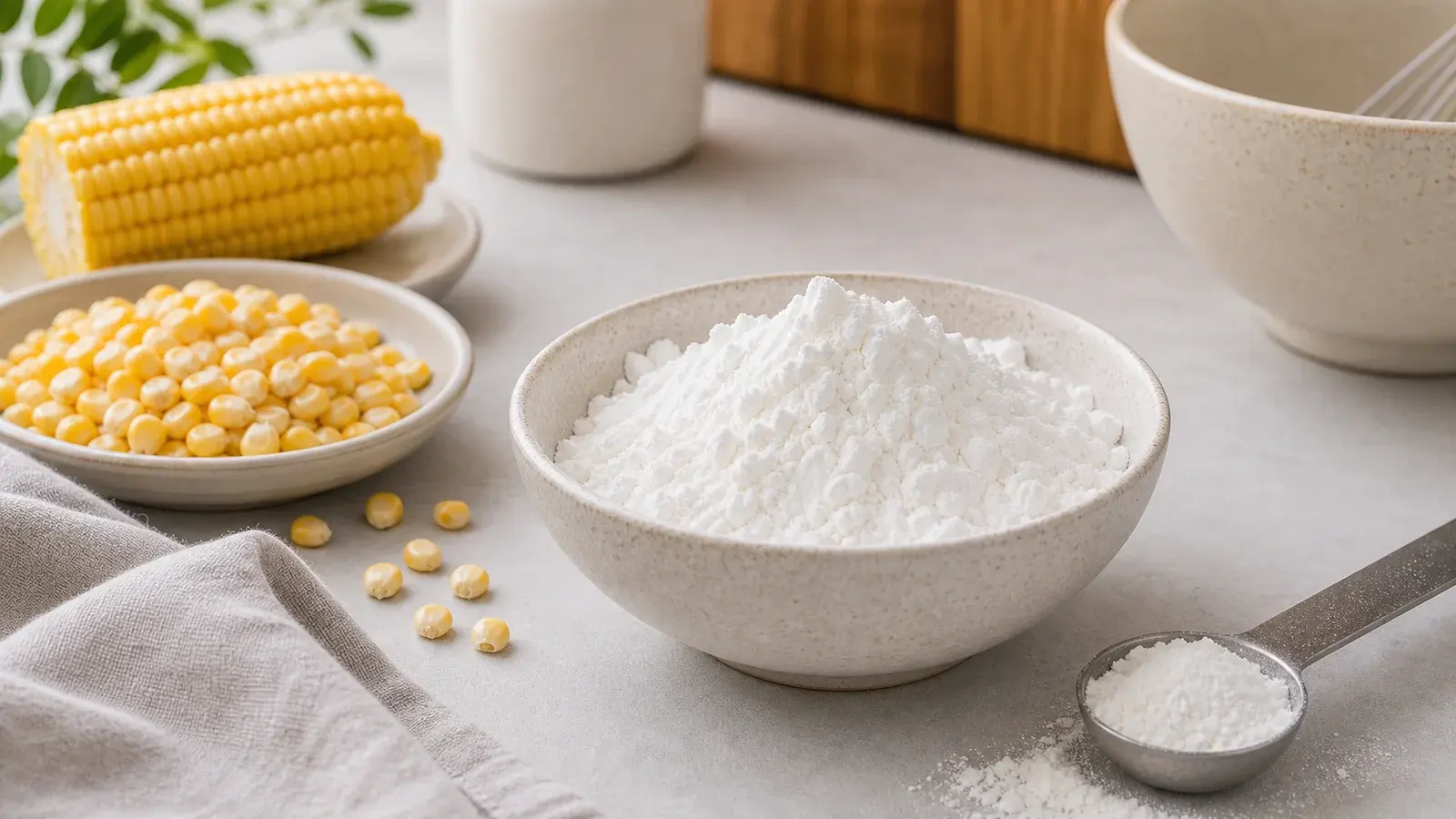
gluten-free corn starch
Gluten-Free Corn Starch
Corn starch (called cornflour in the UK and Australia, which confusingly is different from American "cornmeal") is extracted from the starchy endosperm of corn kernels (Zea mays) through a wet milling process. The end product is a very fine, bright-white, silky powder that is almost pure starch. It has been a kitchen staple for well over a century, appearing in sauces, gravies, puddings, pie fillings, cakes, and coatings worldwide. The reason "certified GF" matters enormously: corn itself contains no gluten, but corn starch is often processed in facilities that also process wheat starch. Wheat starch is used for many of the same industrial applications as corn starch, and shared processing infrastructure is common in large food manufacturing facilities. Celiac organizations consistently warn that non-certified corn starch may be contaminated with gluten above the 20 ppm threshold that is considered safe for celiac disease. In the UK, "cornflour" refers to what Americans call cornstarch — a refined white starch. American "corn flour" is finely ground cornmeal, which is a different product. UK readers should look for "cornflour" from a certified GF brand.
What is it?
Corn starch is refined starch derived from the corn endosperm. Like other refined starches (tapioca, potato, arrowroot), it is nutritionally sparse — primarily carbohydrates with minimal protein, fiber, vitamins, or minerals. Its primary value is functional: thickening, lightening, and crisping. Corn starch contains primarily amylose and amylopectin starch polymers. When heated in liquid, it gelatinizes at around 62–72°C (144–162°F) and produces an opaque, stable, white gel — unlike arrowroot or tapioca, which produce clearer gels. This opacity makes corn starch the preferred choice for opaque gravies and cream-based sauces, while it is less desirable in clear fruit glazes or Asian-style sauces where clarity is prized.
How to use
As a thickener: - Use 1 tablespoon corn starch to thicken 1 cup of liquid (equal to 1 tbsp tapioca starch or 2 tbsp all-purpose wheat flour). - Make a cold-water slurry (1 part corn starch + 2 parts cold water), stir until smooth, then pour into simmering liquid while stirring. - Allow the sauce to come back to a gentle simmer and cook for 1–2 minutes after adding — this fully gelatinizes the starch and removes any raw starch taste. - Corn starch sauces remain stable on re-heating but may thin slightly; add a little more slurry if needed. In GF baking: - Cakes: Replace 2–3 tablespoons of GF flour per cup with corn starch to lighten texture (similar to how it works in traditional "cake flour"). - Crispy coatings: Coat proteins with corn starch before frying for a crispy, golden crust. - GF flour blend component: Use corn starch at 10–20% of a blend for lightness. Pie fillings: An excellent thickener for fruit pie fillings — produces a semi-opaque, stable gel that holds its shape when sliced.
Substitutes
| Substitute | Ratio | Notes |
|---|---|---|
| Arrowroot starch | 1:1 | Produces clearer gel; lower heat stability |
| Tapioca starch | 1:1 | Slightly chewier; clear gel; great for sauces |
| Potato starch | 1:1 | Slightly lighter and glossier; stable at high heat |
| Rice flour | 2 tbsp per 1 tbsp cornstarch | Produces opaque, slightly heavier sauce |
| Kudzu starch | 1:1 | Traditional Japanese thickener; very clear gel |
Safety notes
⚠️ Cross-contamination — Certification Is Essential: Corn is naturally gluten-free, but corn starch processing facilities often also process wheat starch. Corn starch from non-certified facilities may contain gluten above safe levels. For celiac disease, always use corn starch with a certified gluten-free label (GFCO, NSF, or equivalent). Brands like Bob's Red Mill, Argo, and Clabber Girl in the US are popular certified options; in the UK, look for Doves Farm or specifically certified supermarket own-brands. ⚠️ Corn Allergy: Corn is a recognized food allergen, though it is not among the "top 8" in the US or "top 14" in the EU. Corn allergy can range from mild digestive intolerance to more serious reactions. Individuals with corn allergy must avoid corn starch and use arrowroot, tapioca, or potato starch as substitutes. ⚠️ UK Naming Confusion: In the UK and Australia, "cornflour" = refined white corn starch (same as US "cornstarch"). In the US, "corn flour" refers to finely milled corn meal (different product, made from whole corn). This naming difference causes significant recipe confusion — UK readers following US recipes should use cornflour; US readers following UK recipes should use cornstarch. ⚠️ Do Not Eat Raw: Raw corn starch should not be consumed directly (a behavior sometimes seen in pica). Raw starch is indigestible and consumption of large quantities can cause serious digestive complications.
Where to buy
- Mainstream grocery: Very widely available in all large supermarkets (baking aisle) - Health food stores: Bob's Red Mill certified GF cornstarch (US); Doves Farm (UK) - Online (US): iHerb, Amazon, Bob's Red Mill, Argo - Online (UK): Amazon UK, Doves Farm online, Ocado The key is verifying GF certification — most supermarket own-brand cornstarch / cornflour does not carry GF certification and may not be safe for celiac disease.
Some product links may be affiliate links when a valid partner ID is configured. Always verify ingredients and labels before buying.
Storage
Store in an airtight container in a cool, dry place. Corn starch has a very long shelf life — 2–4 years when properly stored. Moisture is the primary risk — clumped corn starch may not disperse evenly in a slurry, leading to lumpy sauces. If clumping occurs, use a fine sieve to break up lumps before making a slurry. Freezing is unnecessary but possible.
FAQ
Why do I need certified GF corn starch if corn has no gluten?
Corn itself contains no gluten, but corn starch is frequently processed in the same facilities and on the same equipment as wheat starch. Cross-contamination with wheat gluten can raise gluten levels above the 20 ppm threshold considered safe for celiac disease. Certified GF corn starch is produced in dedicated or validated GF facilities with testing to confirm gluten levels are safe.
What is the difference between corn starch and cornflour in the UK?
In the UK (and Australia), "cornflour" IS the refined white starch — identical to American "cornstarch." The British "cornflour" is used for thickening exactly as American "cornstarch" is. American "corn flour" is a different product — finely ground cornmeal made from the whole kernel. Follow the recipe's country of origin to determine which product is meant.
How do I prevent lumps in corn starch sauces?
Always make a cold-water slurry before adding corn starch to hot liquid. Mix 1 tablespoon of corn starch with 2 tablespoons of cold water (or cold broth) until completely smooth before adding to the hot sauce. Never add dry corn starch directly to hot liquid. Pour the slurry in gradually while stirring constantly.
Can corn starch replace flour in a roux?
Corn starch can thicken sauces that would traditionally use a flour-based roux, but it does not behave identically. A corn starch-thickened sauce has a different (slightly glossier, more gel-like) texture than a roux-based sauce. Use roughly half the amount of corn starch as you would all-purpose flour, and add it as a slurry rather than a roux.
Does corn starch freeze well in sauces?
Not ideally. Corn starch-thickened sauces and gravies tend to weep (release liquid) and become slimy after freezing and thawing. For dishes intended to be frozen, waxy maize starch, tapioca starch, or a flour-based thickener will hold up significantly better through freeze-thaw cycles.