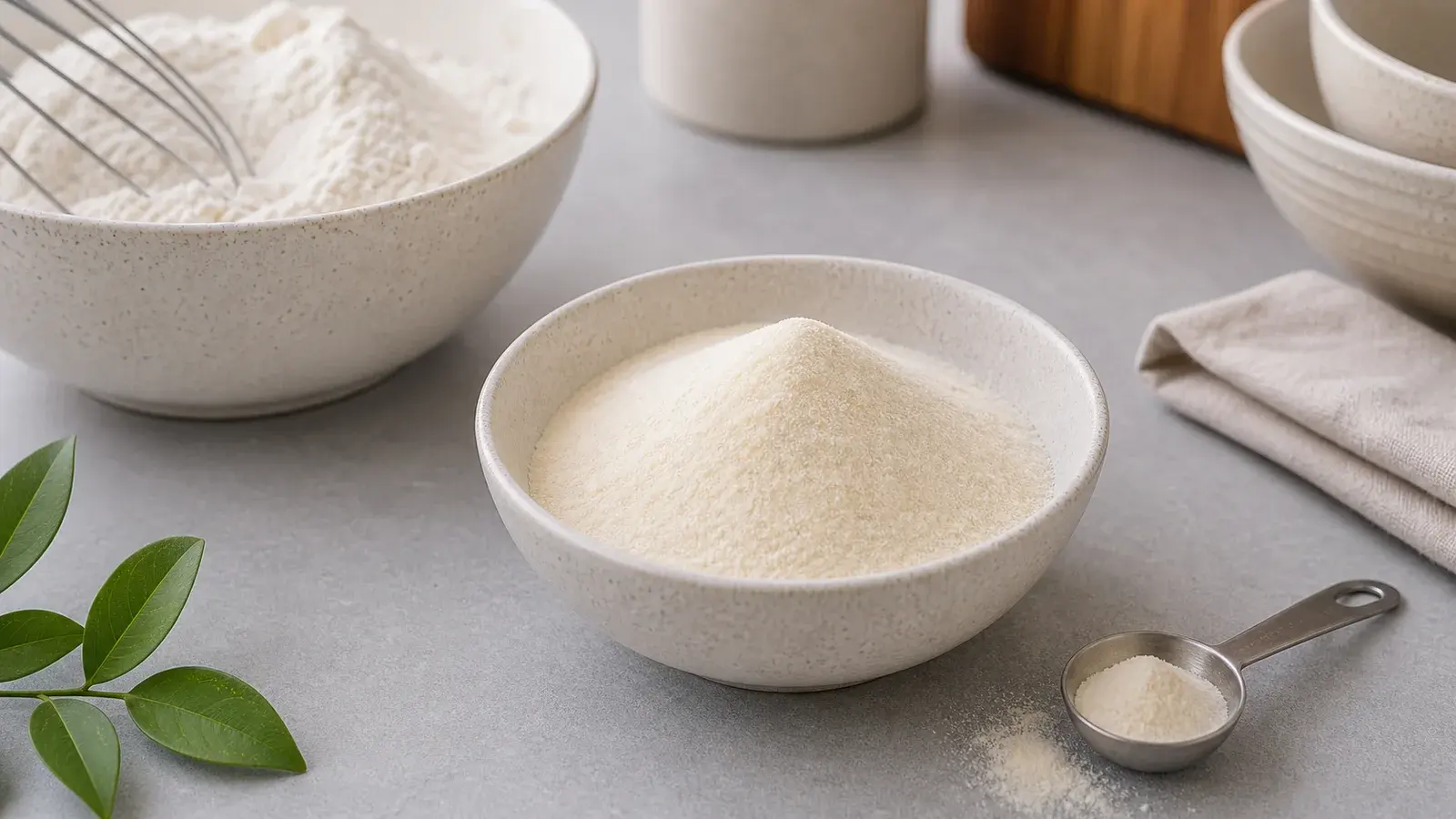
xanthan gum gluten-free baking
Xanthan Gum
Xanthan gum is a polysaccharide produced through the fermentation of sugars (typically from corn, wheat, or other plants) by the bacterium Xanthomonas campestris. First developed in the 1960s as a food-grade stabilizer, it is now a ubiquitous ingredient in gluten-free flour blends, commercial salad dressings, dairy-free ice creams, and countless processed foods. In gluten-free baking, xanthan gum works by creating a network of long-chain molecules that trap air, hold moisture, and give doughs and batters their viscosity. The result is baked goods that hold together, have better rise, and resist crumbling. Even very small quantities — fractions of a teaspoon — have a dramatic effect on texture, which is why precise measurement matters enormously. Xanthan gum is tasteless and odorless, making it highly versatile across sweet and savory applications. It is one of the key reasons that commercial GF flour blends perform so consistently — most pre-mixed blends already contain xanthan gum, so adding more is unnecessary and can lead to gummy results.
What is it?
Xanthan gum is a microbially-derived hydrocolloid — a soluble fiber that forms a viscous gel when dispersed in water. It is classified as food additive E415 in the EU and UK. The fermentation substrate used to produce it varies by manufacturer: corn-derived xanthan gum is the most common in the US, but wheat-derived xanthan exists in some products (though the finished gum contains negligible gluten protein). For GF cooking purposes, xanthan gum is used in tiny amounts (¼ to 1 teaspoon per recipe) to bind ingredients, improve elasticity in doughs, extend shelf life by retaining moisture, and prevent the ice crystal formation in frozen desserts. It is not a flour substitute — it is always used in combination with GF flours.
How to use
The key to xanthan gum is precision — too little and baked goods crumble; too much and they become dense, gummy, and unpleasantly elastic. Standard amounts per cup of GF flour blend: | Recipe Type | Xanthan Gum Amount | |-------------|-------------------| | Cakes and cupcakes | ¼ tsp | | Cookies | ¼ tsp | | Muffins and quick breads | ¼–½ tsp | | Yeast-leavened bread | ½–1 tsp | | Pizza dough | ½ tsp | | Pasta | ½ tsp | - Always mix xanthan gum with dry ingredients before adding liquids — this prevents lumping. - If your GF flour blend already contains xanthan gum (check the label), do not add more. - Reduce slightly when using high-protein flours like almond or chickpea, as they provide natural binding.
Substitutes
| Substitute | Ratio | Notes |
|---|---|---|
| Psyllium husk powder | 2 tsp per ½ tsp xanthan | Better for breads; more elastic, chewier texture |
| Guar gum | 1.5:1 (use 1½ tsp guar per 1 tsp xanthan) | Works better cold; can be slimy in hot applications |
| Ground chia seeds | 1 tbsp + 2 tbsp water per ¼ tsp xanthan | Best in moist bakes like muffins or banana bread |
| Ground flaxseed | 1 tbsp + 3 tbsp water per ¼ tsp xanthan | Adds slight nutty flavor; works well in dense breads |
| Arrowroot starch | 2 tbsp per ¼ tsp xanthan | Milder thickening; best in sauces/gravies, less effective in breads |
Safety notes
⚠️ Corn Allergy: Most commercial xanthan gum in the US is derived from corn fermentation. If you have a corn allergy or sensitivity, look for xanthan gum specifically labeled "corn-free" or derived from alternative substrates (some European brands use sugar beet or other non-corn sources). ⚠️ Wheat-Derived Xanthan Gum: Some manufacturers produce xanthan gum using wheat as the fermentation substrate. The end product typically contains only trace levels of gluten (often below 20 ppm), but highly sensitive celiacs should select products explicitly certified gluten-free and confirm the substrate used. ⚠️ Digestive Sensitivity: Xanthan gum is a fermentable fiber (FODMAP) and can cause bloating, gas, or loose stools in sensitive individuals, especially at higher intakes. The amounts used in baking (¼–1 tsp per recipe) are generally well-tolerated, but those with IBS or severe digestive sensitivities may wish to use psyllium husk instead. ⚠️ Infant Warning: Medical literature has documented serious adverse events (including necrotizing enterocolitis) in premature and newborn infants given products thickened with xanthan gum. Xanthan gum is not appropriate for thickening feeds for premature infants — always follow healthcare provider guidance.
Where to buy
- Health food stores: Whole Foods Market, Sprouts, Natural Grocers (US); Holland & Barrett (UK) - Mainstream grocery: Increasingly found in the baking aisle of large supermarkets - Online (US): iHerb, Amazon, Bob's Red Mill, Anthony's Goods - Online (UK): Amazon UK, Doves Farm, Free From section of major supermarkets online Bob's Red Mill and Anthony's Goods are popular, widely available certified GF options.
Some product links may be affiliate links when a valid partner ID is configured. Always verify ingredients and labels before buying.
Storage
Store xanthan gum in an airtight container at room temperature, away from heat and humidity. Shelf life is 2–4 years when stored properly. Moisture is the enemy — even a damp spoon can cause clumping. Do not refrigerate. If the powder has clumped into hard chunks, it has likely absorbed ambient moisture and may not perform reliably.
FAQ
How much xanthan gum should I use per cup of GF flour?
For most baked goods, use ¼ teaspoon per cup of GF flour for cakes and cookies, and ½–1 teaspoon per cup for breads and pizza doughs. Always check whether your flour blend already contains xanthan gum — adding more on top of an already-gummed blend causes gummy, dense results.
What happens if I use too much xanthan gum?
Too much xanthan gum creates baked goods that are dense, gummy, and unpleasantly rubbery. The texture may feel like chewing on silicone. Breads can become heavy and refuse to rise properly. If your GF baked goods taste gummy or sticky, try reducing the xanthan gum in your next batch.
Is xanthan gum safe for people with celiac disease?
Yes — certified gluten-free xanthan gum is safe for celiac disease. The main caveat is confirming the production source: corn-derived xanthan from a GF-certified facility is the safest choice for celiacs. Wheat-derived xanthan gum from non-certified facilities carries a cross-contamination risk.
Can I skip xanthan gum entirely?
You can, but results will vary. In cookies and dense quick breads, you may get away with using ground flax or chia as a substitute. In yeast-leavened breads, skipping xanthan entirely usually produces crumbly, flat loaves. Psyllium husk powder is the best natural alternative for bread-making.
Is xanthan gum the same as guar gum?
No. Both are hydrocolloid binders used in GF baking, but they behave differently. Xanthan gum is stable at a wide temperature range and works well in hot and cold applications. Guar gum is most effective at cold or room temperature and can cause a slimy texture if overheated. They can be used interchangeably with ratio adjustments, and some bakers blend both for improved texture.