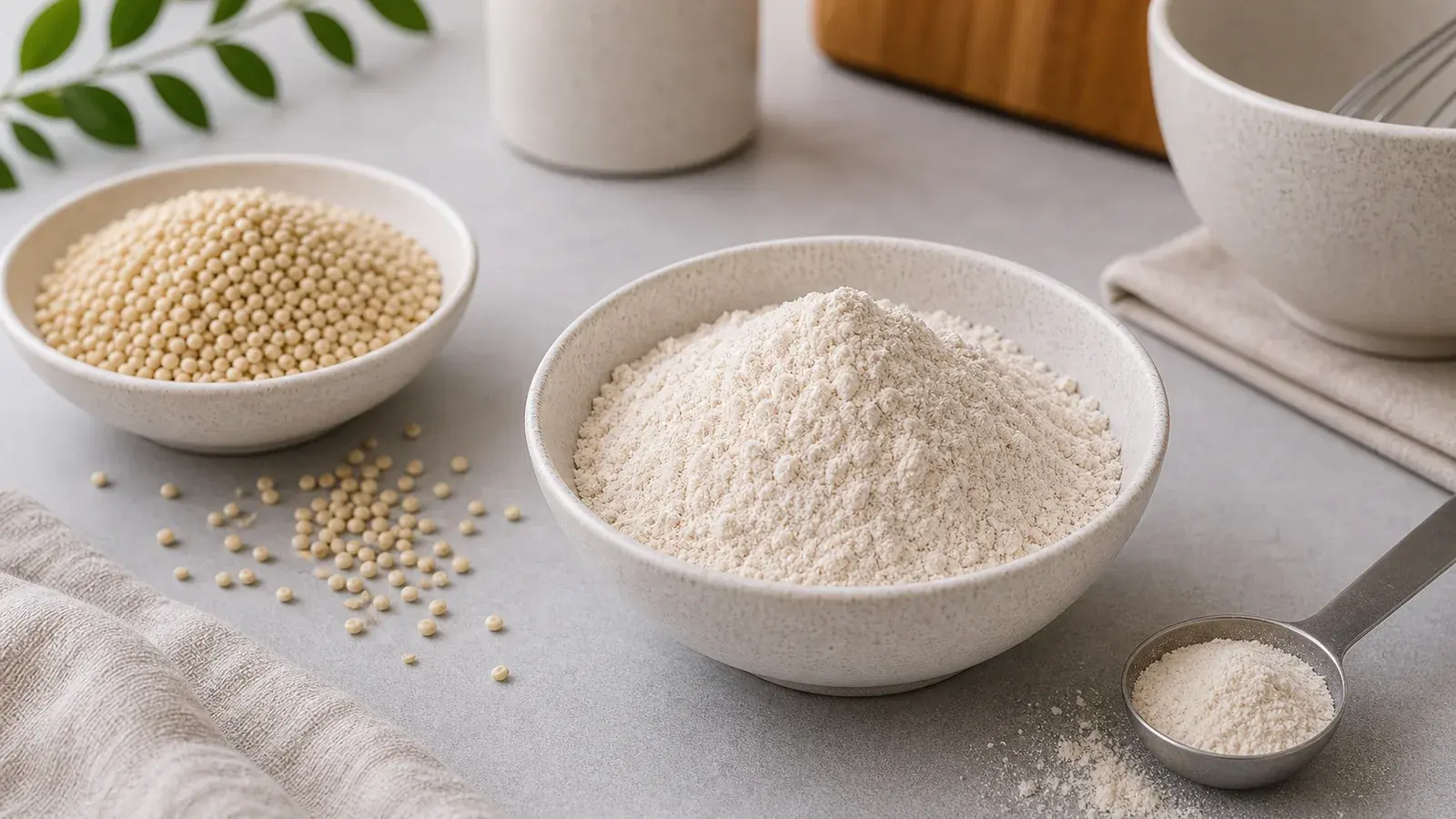
sorghum flour gluten-free
Sorghum Flour
Sorghum (Sorghum bicolor) is an ancient cereal grain that has fed populations across Africa, Asia, and the Americas for thousands of years. It is the fifth most widely grown cereal crop in the world and a critical food security crop in sub-Saharan Africa. In the US, sorghum is primarily grown in the Great Plains region (Kansas, Texas, Nebraska), and "white sorghum" varieties are specifically cultivated for their mild flavor and light color. For GF baking, sorghum flour stands out from most other GF flours because it more closely resembles whole wheat flour in its protein content, fiber, and nutrient density. Its flavor is mild and slightly sweet — much less assertive than buckwheat or teff — making it a near-universal mixer in GF flour blends without dominating the flavor profile. Sorghum flour is also naturally gluten-free (sorghum does not belong to the wheat/barley/rye grass family), high in antioxidants, and contains meaningful amounts of iron, B vitamins, and magnesium. Its relatively high protein content compared with white rice flour gives GF baked goods more structure and a more satisfying, whole-grain character.
What is it?
Sorghum flour is ground from whole sorghum grain. White sorghum flour (from white-seeded sorghum varieties) is the most common in Western GF baking — it is pale cream to ivory in color, mild and slightly sweet in flavor. Red or brown sorghum varieties produce a darker, more tannic flour used less often in baking. Nutritionally, sorghum flour compares favorably with whole wheat flour: approximately 10–11% protein, 6–8% dietary fiber, significant B vitamins (B1, B2, B3, B6), iron, and antioxidants. Its complex carbohydrate profile includes a proportion of resistant starch, which has a lower glycemic impact than refined starches and provides prebiotic benefits.
How to use
- In GF flour blends: Use sorghum at 30–50% of a GF flour blend alongside starchy flours (tapioca, potato, rice). It contributes structure, nutrition, and a pleasant whole-grain flavor. - GF bread: Sorghum is a top choice for the "whole grain" component in GF bread loaves. At 25–40% of the flour blend, paired with psyllium husk, it produces a bread with genuine body and nutrition. - Muffins, quick breads, and pancakes: Excellent at up to 50–75% of the flour; produces moist, flavorful results. - Flatbreads and roti: Sorghum is used traditionally in gluten-free flatbreads across South Asian and African cuisines (it is the base of jowar roti). - Cookies: Use at 25–50%; pairs well with oats (certified GF), cinnamon, and chocolate. - Conversion tip: Start with a 1:1 substitution for other whole-grain GF flours; add a binder (¼–½ tsp xanthan gum per cup) as sorghum lacks gluten.
Substitutes
| Substitute | Ratio | Notes |
|---|---|---|
| Teff flour | 1:1 | Stronger, earthier flavor; darker color |
| Brown rice flour | 1:1 | Less protein and fiber; milder; slightly grittier |
| Millet flour | 1:1 | Very mild flavor; slightly sweeter; similar protein |
| Buckwheat flour | 1:1 | Much bolder flavor; use at max 30% to avoid dominance |
| Oat flour (certified GF) | 1:1 | Sweeter, lighter; also adds fiber; check GF certification |
Safety notes
⚠️ Cross-contamination: Sorghum is naturally gluten-free, but many sorghum farms and mills handle multiple grains. Purchase certified gluten-free sorghum flour from a dedicated GF facility for celiac-safe baking. ⚠️ Tannin Content: Some sorghum varieties (particularly darker red/brown types) contain tannins that can contribute a slightly bitter, astringent flavor. White sorghum flour has the lowest tannin content and is best for baking. ⚠️ Phytic Acid: Like most whole grains, sorghum contains phytic acid, which can bind minerals like iron and zinc, reducing their absorption. Soaking, fermenting, or cooking sorghum reduces phytic acid levels. For individuals with iron deficiency or who rely on sorghum as a primary dietary grain, this is worth noting. ⚠️ Grain Allergy Distinction: Sorghum is a cereal grain (a grass, like rice and corn). Those with broad grass-seed allergies should exercise caution and consult an allergist, though sorghum allergy is not common.
Where to buy
- Health food stores: Whole Foods Market, Sprouts, Natural Grocers (US); Holland & Barrett, Planet Organic (UK) - Online (US): iHerb, Amazon, Bob's Red Mill, Anthony's Goods, Arrowhead Mills - Online (UK): Amazon UK, Doves Farm, Real Foods - Specialty/ethnic grocery: South Asian grocery stores often carry sorghum (jowar) flour at very reasonable prices
Some product links may be affiliate links when a valid partner ID is configured. Always verify ingredients and labels before buying.
Storage
Store sorghum flour in an airtight container in a cool, dry place. At room temperature, it keeps for up to 6 months. Refrigerate for up to 12 months. Freeze for up to 18 months. As with all whole-grain flours, the natural oils in sorghum can become rancid over time — smell-test before use.
FAQ
Is sorghum flour the same as jowar flour?
Yes. Jowar is the Hindi/Marathi name for sorghum (Sorghum bicolor), and jowar flour is the same product as sorghum flour. South Asian grocery stores often sell it as jowar atta and it is an affordable, readily available source of certified-clean sorghum flour. Check for GF certification if needed.
Can I use sorghum flour as a 1:1 substitute for whole wheat flour?
Sorghum comes closest to whole wheat in nutrition and flavor of any GF flour, but it cannot work as a 1:1 substitute due to the absence of gluten. Use it as 30–50% of a GF flour blend with starches and a binder. In terms of nutritional profile and mild, wholesome flavor, it is the best GF analog to whole wheat.
Does sorghum flour baking require a binder?
Yes. Like all GF flours, sorghum provides no gluten to hold baked goods together. Add ¼–½ tsp xanthan gum or 1 tsp psyllium husk powder per cup of sorghum flour to provide binding and structural support.
What does sorghum flour taste like?
Sorghum flour has a mild, slightly sweet, wholesome flavor — often compared to a lighter version of whole wheat flour. It is far less assertive than buckwheat or teff and blends seamlessly into most baked goods without contributing a distinctive or competing flavor. This neutrality is one of its key advantages.
Is sorghum flour good for you?
Sorghum flour is genuinely nutritious by GF flour standards. It provides meaningful protein, dietary fiber, B vitamins, iron, and antioxidants. Its resistant starch content has a lower glycemic impact than white rice flour, and its antioxidant levels (particularly 3-deoxyanthocyanins) have been studied for anti-inflammatory benefits. It is a worthwhile nutritional upgrade over refined GF flour blends.