rice flour gluten-free
Rice Flour
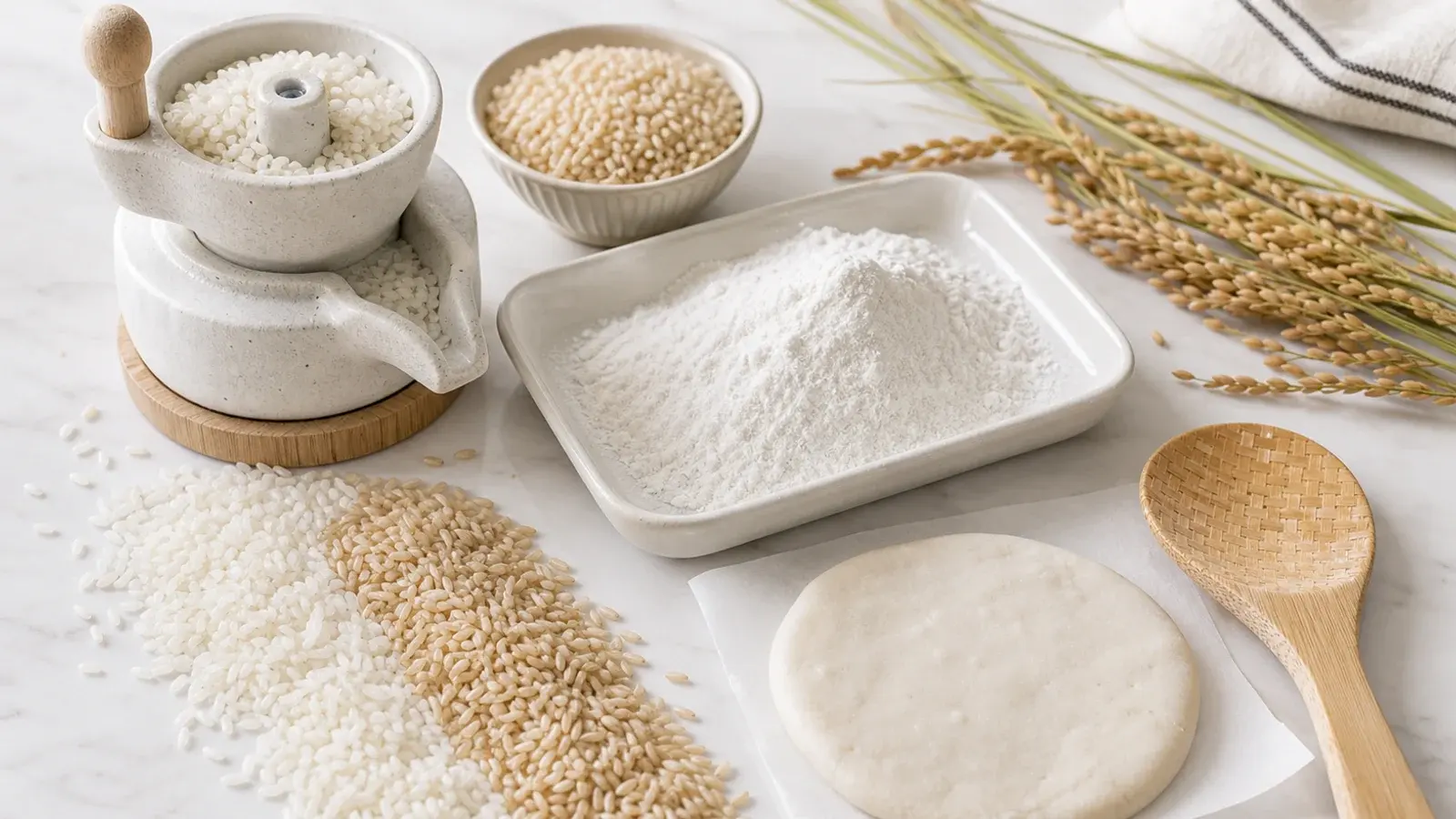
Rice flour is produced by finely milling polished white rice or whole-grain brown rice into a fine powder. It has been used for millennia across East and Southeast Asia — in rice noodles, rice paper, mochi, and countless steamed and fried preparations — long before it became a staple of Western GF cooking. Today it is the single most common ingredient in commercial GF flour blends and pre-mixed GF baking mixes. White rice flour is made from polished (bran-removed) white rice. It is neutral in flavor, almost pure starch and carbohydrate, and contributes a smooth, light texture to baked goods. Brown rice flour retains the bran and germ, giving it a slightly nutty flavor, higher fiber, more vitamins and minerals, and a somewhat grittier texture. Both are naturally gluten-free. The main limitation of rice flour — particularly white rice flour used alone — is a slightly gritty texture, which is why it is most effective when combined with other GF flours and starches. "Ultra-fine" or "superfine" white rice flour (common in Asian grocery stores and some specialty brands) produces a significantly smoother result.
What is it?
Rice flour is the milled powder of rice grain. White rice flour is primarily refined starch — it has a very mild, almost neutral flavor and a smooth texture. Brown rice flour retains the bran layer, offering more fiber, protein, and a nuttier flavor but a slightly coarser feel. Both versions are naturally gluten-free, grain-based, and dairy-free. Nutritionally, white rice flour is similar to white rice — a source of carbohydrates with limited fiber or micronutrients. Brown rice flour is more nutritionally valuable, offering B vitamins, iron, and dietary fiber. For a nutritionally well-rounded GF diet, brown rice flour or blends incorporating higher-nutrient flours are preferable. Rice flour has no natural binding properties — it contains neither gluten nor significant protein to hold baked goods together — making the addition of a binder (xanthan gum, psyllium husk) essential in most baking applications.
How to use
Rice flour is almost always used as part of a blend: Classic GF Flour Blend (general purpose): - 2 parts white rice flour - ⅔ part potato starch - ⅓ part tapioca starch - Add xanthan gum separately per recipe Specific applications: - Cakes and muffins: Use in a blended flour mix; ultra-fine white rice flour produces the smoothest texture. - Pasta and noodles: Rice flour is excellent in GF pasta; often used at 100% with eggs and a small amount of tapioca starch. - Tempura batter: Use 100% white rice flour (or blend with tapioca starch) for an ultra-light, crispy, gluten-free tempura. - Gravies and sauces: Use white rice flour as a thickener — similar ratios to all-purpose flour. - Coatings and dredging: Light, crispy coatings on meat and fish.
Substitutes
| Substitute | Ratio | Notes |
|---|---|---|
| Sorghum flour | 1:1 | Higher protein, nuttier flavor; excellent nutritional upgrade |
| Millet flour | 1:1 | Similar neutral flavor; slightly yellowish; mild taste |
| Oat flour (certified GF) | 1:1 | Slightly sweeter; adds fiber; check GF certification |
| Cassava flour | ¾:1 (¾ cup cassava per 1 cup rice) | Absorbs more liquid; adjust wet ingredients |
| Teff flour | 1:1 | Much stronger flavor; use at max 30% to avoid overpowering |
Safety notes
⚠️ Cross-contamination: Rice is naturally gluten-free, but rice flour processed in shared facilities with wheat flour is a genuine risk for celiac patients. Always choose rice flour with a certified gluten-free label. Bob's Red Mill, for instance, produces its GF flours in a dedicated GF facility. ⚠️ Arsenic in Rice: Rice naturally accumulates inorganic arsenic from soil and water at higher levels than most other grains. The FDA monitors rice and rice products for arsenic levels. For individuals eating large amounts of rice flour daily (as is common on a fully GF diet), diversifying your flour choices — alternating with sorghum, oat, millet, and other GF flours — is a prudent precaution, particularly for young children and pregnant women. There is no need for alarm at moderate consumption, but variety is advisable. ⚠️ Gritty Texture Risk: Standard white rice flour can produce gritty baked goods if the grind is too coarse. For the smoothest results, seek superfine or "extra fine" white rice flour, or blend with tapioca starch which smooths the texture. ⚠️ High Glycemic Index: White rice flour has a high glycemic index and low fiber content. For those managing blood sugar or insulin response, blending with higher-fiber, higher-protein GF flours is recommended.
Where to buy
- Health food stores: Whole Foods Market, Sprouts, Trader Joe's (US); Holland & Barrett, Waitrose (UK) - Asian grocery stores: Excellent source of superfine white rice flour at low cost; brands like Erawan (from Thailand) are prized for fineness - Mainstream grocery: Widely available; Bob's Red Mill is the most recognized GF brand - Online (US): iHerb, Amazon, Bob's Red Mill, Anthony's Goods - Online (UK): Amazon UK, Doves Farm, Asian grocery online stores
Some product links may be affiliate links when a valid partner ID is configured. Always verify ingredients and labels before buying.
Storage
Store rice flour in an airtight container in a cool, dark, dry place. White rice flour keeps for 12–18 months at room temperature. Brown rice flour, which retains the oily bran, should be refrigerated and used within 3–6 months to prevent rancidity. Freeze either type for storage beyond 1 year.
FAQ
What is the difference between white and brown rice flour in baking?
White rice flour is more neutral in flavor, lighter in color, and produces a smoother texture. Brown rice flour has a nuttier flavor, more fiber, and a slightly grainier feel. Both work in GF baking; choose based on the flavor profile and nutritional goals of your recipe. In delicate pastries, white rice flour is preferred; in hearty muffins and breads, brown adds nutrition and complexity.
Why is my rice flour baking gritty?
Gritty rice flour baking is usually a result of using coarser-ground rice flour. Switch to superfine white rice flour (available at Asian grocery stores or from specialty brands) and blend with tapioca or arrowroot starch to improve smoothness. Letting batters rest before baking also allows the starch granules to hydrate and reduces grittiness.
Is rice flour the same as rice starch?
No. Rice flour is milled from whole rice grains and contains starch, protein, and fiber. Rice starch is a purified starch extracted from rice, similar to cornstarch in function. They are not interchangeable in recipes. Rice flour is used in larger quantities as a primary flour; rice starch is used in small amounts for thickening.
Can I make rice flour at home?
Yes — use a high-powered blender or grain mill to grind dry, uncooked white or brown rice until it reaches a very fine powder consistency. Sift through a fine-mesh sieve and re-grind any coarser particles. Home-ground rice flour tends to be less fine than commercial superfine varieties, which can result in grittier baked goods.
How much rice flour do I use instead of all-purpose wheat flour?
Rice flour is not a direct 1:1 substitute for all-purpose flour on its own — it needs starch and a binder to replicate wheat flour's behavior. Use a complete GF flour blend (which combines rice flour with starches and sometimes a binder) at a 1:1 ratio. Alternatively, blend 2 cups white rice flour + ⅔ cup potato starch + ⅓ cup tapioca starch as a rough all-purpose GF substitute, then add xanthan gum per recipe type.