nutritional yeast vegan
Nutritional Yeast
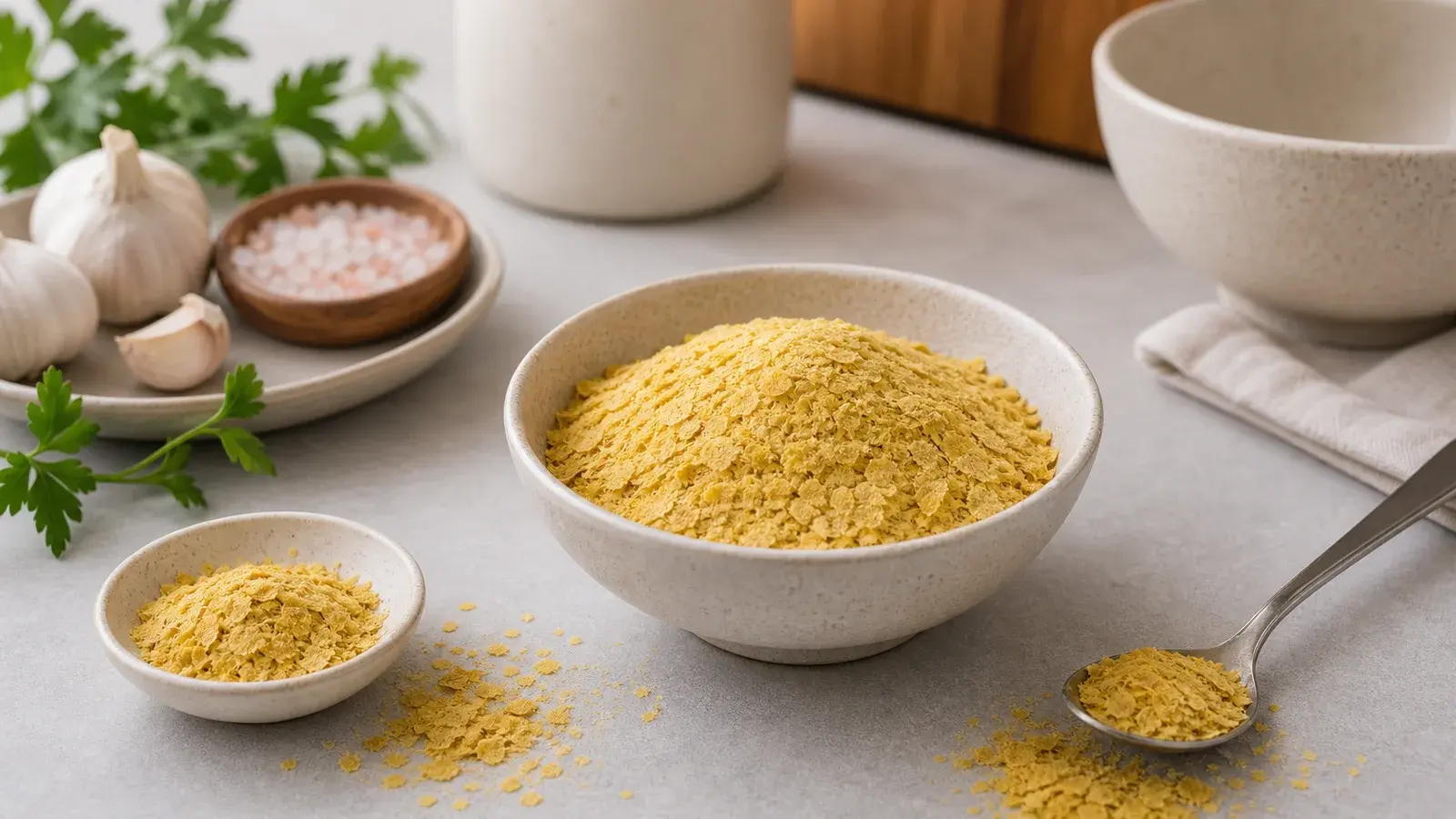
Nutritional yeast is a deactivated strain of Saccharomyces cerevisiae — the same yeast species used in brewing and baking — that has been grown specifically as a food product. It is cultivated on nutrient-rich substrates (typically molasses or cane sugar), then harvested, heated to deactivate the yeast (so it cannot leaven bread or ferment), washed, and dried into yellow flakes or powder. The deactivation process is crucial: nutritional yeast cannot ferment or cause bread to rise — it is a finished food ingredient, not a leavening agent. Do not confuse it with active dry yeast, instant yeast, or brewer's yeast, which serve completely different functions. Nutritional yeast's signature characteristic is its intensely savory, cheesy, umami-laden flavor — a result of the natural glutamates released during processing. It is sometimes called "nooch" (affectionate nickname). This flavor comes from naturally occurring glutamic acid (the same amino acid that makes Parmesan cheese, miso, and tomatoes so savory) — it is not the same as MSG as an additive, though the underlying biochemistry of umami taste is similar.
What is it?
Nutritional yeast is a whole-food, complete protein source — meaning it contains all nine essential amino acids. Unfortified nutritional yeast provides protein, fiber, B vitamins (B1, B2, B3, B6, B9), zinc, selenium, and chromium. Fortified nutritional yeast additionally contains added vitamin B12, which is critical for vegans and those on restricted diets where B12 from animal sources is absent. Check the label — not all nutritional yeast is fortified. It comes in two main forms: flakes (most common for cooking — dissolve easily, light texture) and powder (finer grind, blends more smoothly into sauces). Both are interchangeable in most recipes; use slightly less powder by volume as it is denser.
How to use
- Cheesy sauces: The primary use. Combine with soaked cashews, potato starch, plant-based milk, and nutritional yeast for a rich, melty vegan GF cheese sauce. - Pasta topping: Sprinkle generously over GF pasta in place of Parmesan — the flavor is remarkably convincing. - Popcorn: Toss with oil and nutritional yeast for "cheesy" popcorn that rivals the flavored variety. - Soups and stews: Stir in 1–2 tablespoons to add depth and body to any broth-based dish. - Savory baked goods: Add 1–3 tablespoons to GF bread, crackers, or flatbread dough for savory umami depth. - Dips and spreads: Blend into hummus, cashew cream, or avocado dip. - Egg scrambles: A classic vegan scramble includes nutritional yeast for a savory, egg-like flavor. - Typical amounts: 1–4 tablespoons per serving in most applications; start small and adjust to taste.
Substitutes
| Substitute | Ratio | Notes |
|---|---|---|
| Parmesan cheese (finely grated) | 2 tbsp per 3 tbsp nooch | Not vegan; dairy; excellent umami match |
| Miso paste (GF) | 1 tsp per 2 tbsp nooch | Adds fermented depth; different flavor; high sodium |
| Tamari or coconut aminos | 1 tsp per 2 tbsp nooch | Liquid; provides umami; different texture |
| Porcini mushroom powder | 1 tsp per 2 tbsp nooch | Deep umami; earthy; no cheesy notes |
| Cashew cream (plain) | N/A — flavor enhancer only | For cheesy texture, not flavor; combine with other subs |
Safety notes
⚠️ Not Safe for Active Yeast Infections / Candida Protocols: Nutritional yeast is a deactivated yeast and cannot proliferate in the body — it is a processed food ingredient. However, some practitioners of Candida elimination diets advise avoiding all yeast products. Discuss with your healthcare provider if you are on an active Candida protocol. ⚠️ Cross-contamination for Celiac Disease: Nutritional yeast is naturally gluten-free as an ingredient, but some brands are processed in facilities that also handle barley or wheat. Always purchase certified gluten-free nutritional yeast for celiac-safe cooking. Brands like Bragg, Bob's Red Mill, and NOW Foods produce certified GF versions. ⚠️ Fortified B12 Cyanocobalamin: Most fortified nutritional yeast uses cyanocobalamin as the B12 form — the safest and most studied form. A small number of individuals with MTHFR gene mutations may prefer methylcobalamin; check with your healthcare provider if this is relevant to you. ⚠️ High in Purines: Nutritional yeast is relatively high in purines. Individuals managing gout or hyperuricemia should consume in moderation and discuss with their doctor. ⚠️ Tyramine Content: Nutritional yeast contains tyramine, a compound that can trigger migraines in susceptible individuals. If you are prone to tyramine-triggered migraines, introduce nutritional yeast cautiously.
Where to buy
- Health food stores: Whole Foods Market, Sprouts, Natural Grocers (US); Holland & Barrett, Planet Organic (UK) - Mainstream grocery: Increasingly available in GF, vegan, and natural food aisles - Online (US): iHerb, Amazon, Bragg (direct), Bob's Red Mill, NOW Foods - Online (UK) Amazon UK, Holland & Barrett, Grape Tree, Marigold (UK brand, "Engevita" — one of the most respected) Marigold's Engevita is the best-known UK brand; Bragg is the US standard-bearer.
Some product links may be affiliate links when a valid partner ID is configured. Always verify ingredients and labels before buying.
Storage
Store in an airtight container in a cool, dark place — ideally the refrigerator or freezer. Nutritional yeast flakes can absorb moisture from the air and lose their potency if stored in a warm, humid kitchen. Shelf life is typically 2 years unopened; after opening, refrigerate for up to 12 months. The flavor degrades over time — fresh nutritional yeast has a more vibrant cheesy flavor than old stock.
FAQ
Is nutritional yeast the same as active dry yeast?
No — they are entirely different products. Active dry yeast and instant yeast are living yeast cultures that produce carbon dioxide gas to leaven bread. Nutritional yeast is deactivated (killed by heat during processing) and cannot leaven anything — it is a food ingredient used for flavor and nutrition, not baking lift.
Does nutritional yeast actually taste like cheese?
Yes, to a surprisingly convincing degree. The savory, umami-rich, slightly nutty flavor of nutritional yeast closely resembles aged cheese — particularly Parmesan or nutritional-style cheddar. Most non-vegans find the cheesy flavor entirely convincing in sauces, pasta toppings, and dips.
Does nutritional yeast provide vitamin B12?
Only if it is fortified. Not all nutritional yeast contains B12 — check the nutrition label. Fortified versions are an important B12 source for vegans, as B12 naturally occurs almost exclusively in animal products. If using nutritional yeast as a B12 source, choose a certified fortified brand and check the amount per serving.
Is nutritional yeast a complete protein?
Yes — nutritional yeast contains all nine essential amino acids and is considered a complete protein. A 2-tablespoon serving typically provides 5–8 grams of protein, making it one of the more protein-dense plant foods available.
Can people with yeast sensitivities eat nutritional yeast?
Nutritional yeast is deactivated and cannot proliferate in the body the way active yeast can. However, individuals who have documented IgE-mediated yeast allergies (which are rare) or who experience sensitivities to yeast-containing fermented foods may also react to nutritional yeast. If you suspect a yeast sensitivity, consult an allergist before introducing nutritional yeast.