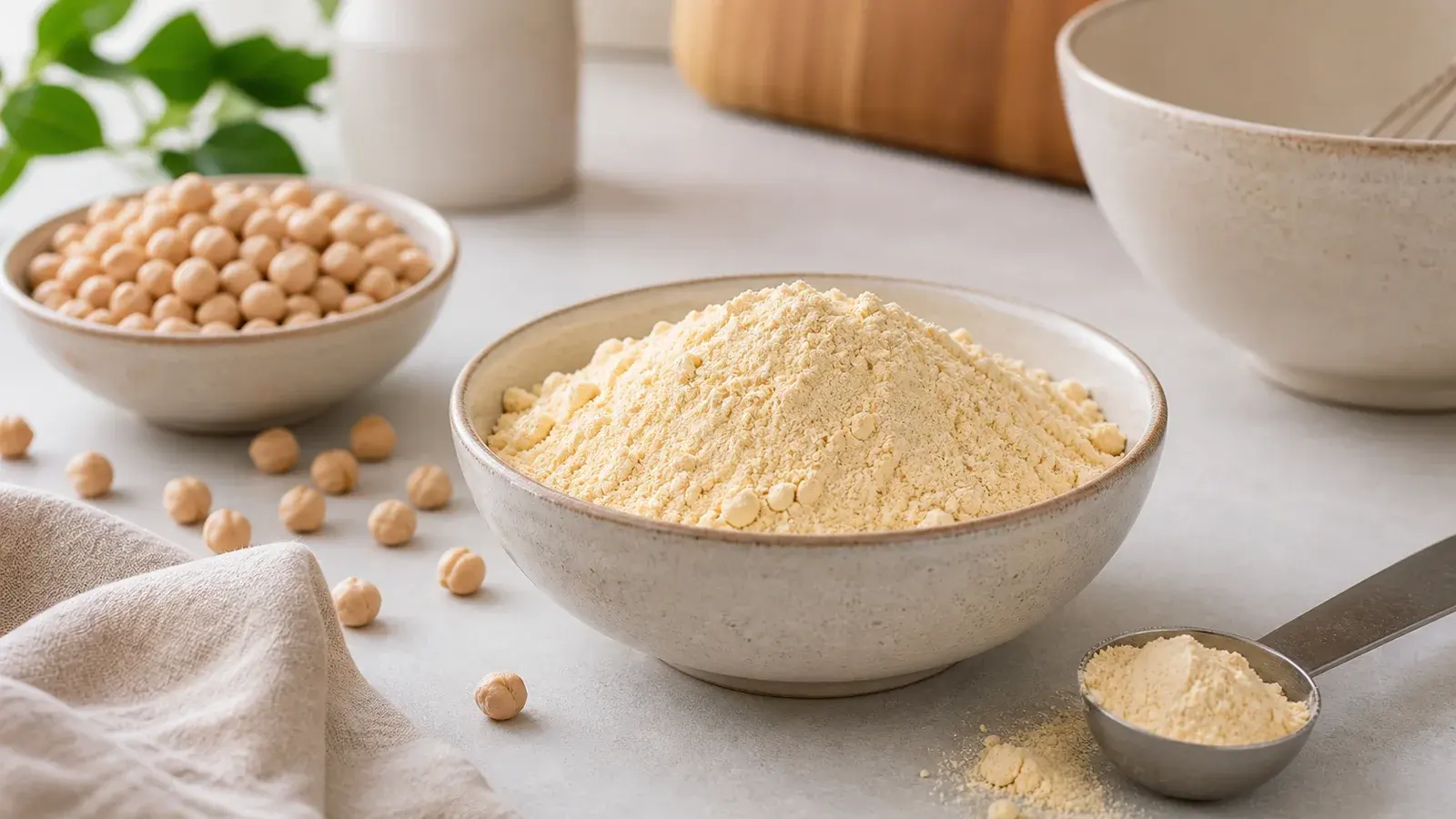
chickpea flour gluten-free
Chickpea Flour
Chickpea flour is made from ground dried chickpeas (Cicer arietinum). There are two main types: besan, which is made from a smaller variety of dried chickpea (chana dal, often roasted before grinding), and Western-style chickpea flour (also called garbanzo flour in the US), made from larger chickpea varieties. Besan tends to be slightly finer and roastier in flavor; Western chickpea flour is somewhat coarser. Both work in most recipes, though besan is the more traditional choice in South Asian cooking. Chickpea flour is naturally gluten-free (chickpeas are legumes, not grains) and provides an extraordinary nutritional profile for a GF flour: approximately 22% protein, 11% fiber, significant iron, zinc, folate, and B vitamins. Its high protein content means it provides genuine structural binding in baked goods — reducing or eliminating the need for additional binders like xanthan gum in many applications. The flavor is distinctive — earthy, slightly nutty, with a savory umami quality that is beloved in traditional applications but requires consideration in sweet baking. When blended with other GF flours in sweet applications, the flavor becomes less noticeable, especially with strong flavors like chocolate, spices, or citrus.
What is it?
Chickpea flour is the finely milled powder of dried chickpeas. As a legume-based flour, it is simultaneously gluten-free, grain-free, and high in both protein and fiber — a nutritional trifecta rare among GF flours. Its protein includes meaningful levels of all essential amino acids, making it an excellent plant-based protein source. The high protein content contributes to its functional baking properties: chickpea flour provides better structure and cohesion than starchy GF flours, and it behaves more like wheat flour in terms of protein functionality (though it lacks gluten's elasticity). It has a medium-high water absorption capacity.
How to use
Savory applications (where chickpea flour excels): - Socca/farinata: A traditional Ligurian/Provençal flatbread using 100% chickpea flour, water, oil, and salt — simple, delicious, naturally GF. - Pakoras and bhajis: Traditional South Asian fritters using besan as the batter. - Egg substitute: Mix 3 tbsp chickpea flour + 3 tbsp water = 1 "chickpea egg" — excellent binder in veggie burgers, fritters, and dense bakes. - Savory crepes/wraps: 100% chickpea flour produces pliable, protein-rich wraps. - Batter coating: Creates a light, crispy, protein-rich coating on fried foods. In GF baking blends (sweet): - Use 15–25% of a flour blend to boost protein without overpowering the flavor. - Pairs well with rice flour, tapioca starch, and strong flavors (chocolate, banana, spices). - Reduce or skip xanthan gum when chickpea flour is 25%+ of the blend.
Substitutes
| Substitute | Ratio | Notes |
|---|---|---|
| Fava bean flour | 1:1 | Similar legume flour; slightly different flavor |
| Lentil flour | 1:1 | Mild, earthy; good protein; milder flavor than chickpea |
| Sorghum flour | 1:1 | Grain-based; milder flavor; similar protein level |
| Pea flour (split pea) | 1:1 | Very mild; high protein; slight vegetal note |
| White bean flour | 1:1 | Mildest legume flour; closest to neutral |
Safety notes
⚠️ Legume Allergy: Chickpeas are legumes. People with chickpea allergy (which is distinct from but may co-occur with peanut allergy, as peanuts are also legumes) must avoid chickpea flour entirely. Cross-reactivity between chickpea and other legumes (soy, peanut, lentil) is possible — consult an allergist if you have a legume allergy. ⚠️ FODMAP Warning: Chickpea flour is high in galactooligosaccharides (GOS), a type of FODMAP. For individuals with IBS following a low-FODMAP diet, chickpea flour in quantities greater than about 2 tablespoons per serving can trigger digestive symptoms including bloating, gas, and abdominal pain. Smaller amounts may be tolerated; consult a registered dietitian for personalized guidance. ⚠️ Cross-contamination: Chickpeas are naturally gluten-free, but processing facilities may handle wheat and other gluten-containing grains. Always choose certified gluten-free chickpea flour for celiac-safe cooking. ⚠️ Raw Chickpea Flour Safety: Raw chickpea flour should not be eaten uncooked in large quantities — like raw legumes, it contains compounds (lectins, trypsin inhibitors) that are reduced by cooking. Always ensure chickpea flour baked goods are fully cooked through.
Where to buy
- South Asian grocery stores: Excellent and affordable source of besan — often the freshest and least expensive option - Health food stores: Whole Foods Market, Sprouts (US); Holland & Barrett, Waitrose (UK) - Online (US): iHerb, Amazon, Bob's Red Mill, Anthony's Goods - Online (UK): Amazon UK, Doves Farm, Asian grocery online Bob's Red Mill, Anthony's Goods, and Arrowhead Mills offer certified GF chickpea/garbanzo flour in the US.
Some product links may be affiliate links when a valid partner ID is configured. Always verify ingredients and labels before buying.
Storage
Store chickpea flour in an airtight container in a cool, dark, dry place. Shelf life at room temperature is 3–6 months. Refrigerate for up to 12 months. Chickpea flour absorbs moisture readily and can develop a rancid, musty smell if stored poorly. Always smell before use — fresh chickpea flour should smell mildly nutty and earthy; off-smelling flour should be discarded.
FAQ
Is chickpea flour (besan) the same as gram flour?
Yes. Gram flour and besan both refer to flour made from dried chickpeas (specifically chana dal in the case of besan). "Chickpea flour" or "garbanzo flour" typically refers to Western-style flour from larger chickpea varieties. They are functionally similar and interchangeable in most recipes, though besan may be slightly finer and more roasted in flavor.
Does chickpea flour taste good in sweet baking?
Chickpea flour has a distinctive earthy, savory flavor that is most pronounced when used alone or in large quantities. In sweet baking, it is best used at 15–25% of a flour blend alongside rice flour and tapioca starch, and paired with strong flavors — chocolate, cinnamon, banana, or citrus — that mask the legume note. Many people report not noticing it once baked.
Can chickpea flour replace eggs?
Yes, in many applications. A "chickpea egg" is 3 tablespoons of chickpea flour mixed with 3 tablespoons of water, left for 1 minute to hydrate, then added to the recipe. It works well in veggie burgers, fritters, and dense baked goods as a binding and moisture agent.
Is chickpea flour suitable for a low-carb diet?
Chickpea flour is lower in net carbohydrates than rice flour due to its high fiber content, but it is not a low-carb flour — a ¼-cup serving has about 13g net carbs. It is, however, far more nutritionally rich than most GF flours, with high protein and fiber making it more blood-sugar-friendly than refined starches.
Why does chickpea flour batter sometimes smell unpleasant when raw?
Raw chickpea flour has a distinct, somewhat sulfurous or "beany" smell due to natural compounds in the legume. This aroma largely disappears during cooking. If the smell persists strongly in finished baked goods, you may be using too high a proportion; try reducing chickpea flour in the blend or toasting it lightly in a dry pan before using to mellow the flavor.