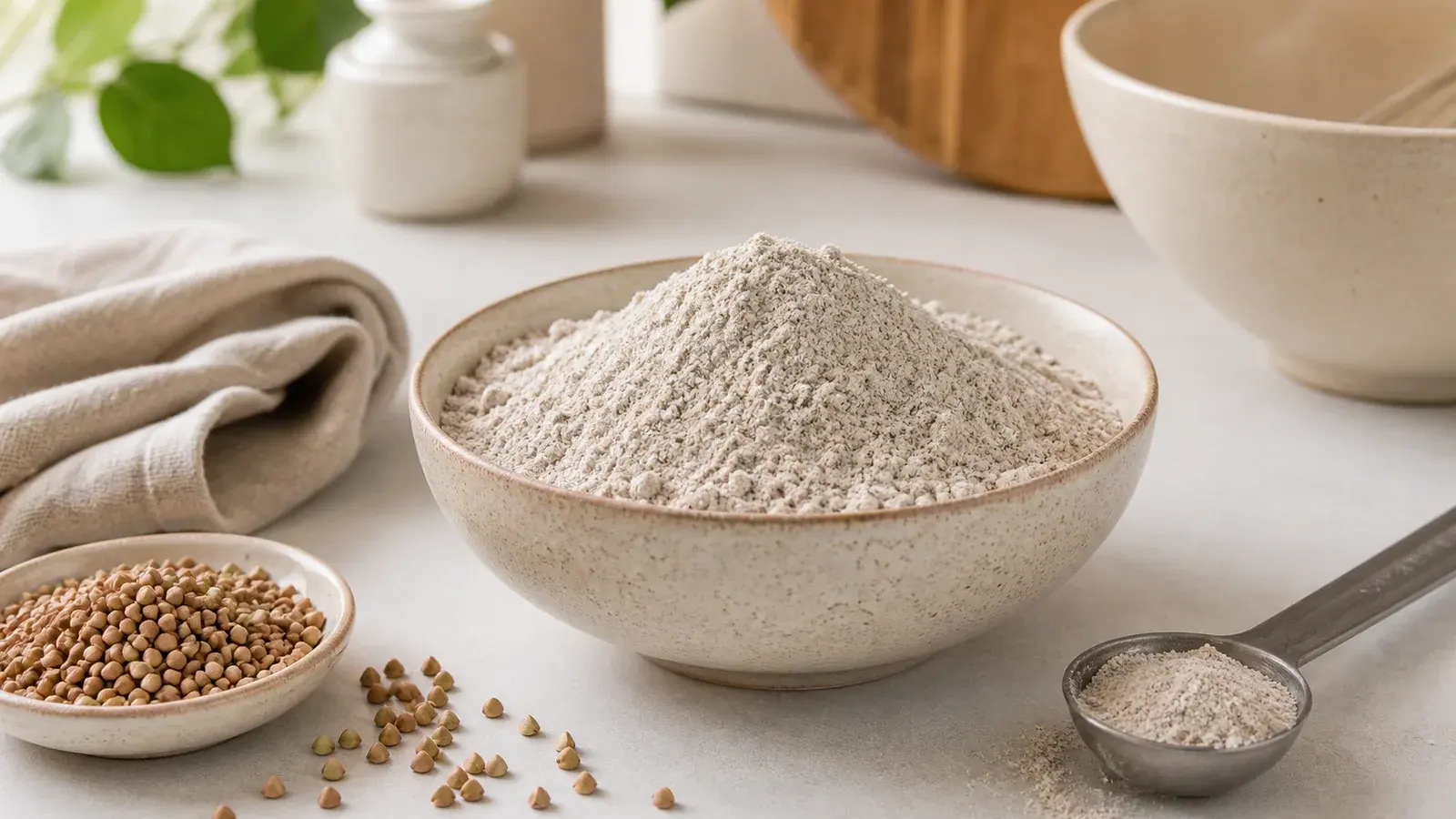
buckwheat flour gluten-free
Buckwheat Flour
Buckwheat (Fagopyrum esculentum) is a flowering plant native to Central Asia, now cultivated across much of Asia, Europe, and North America. It is a pseudo-cereal — like quinoa and amaranth, it is the seed of a broad-leafed plant rather than a grass, which is why it contains no gluten. The term "buckwheat" comes from the Dutch boekweit ("beech wheat") referring to the triangular, beechnut-like shape of the seed. Buckwheat flour is milled from the hulled buckwheat grain (groat) and ranges in color from pale cream (light buckwheat flour, milled from lighter varieties or with hull removed) to deep brown-gray (dark buckwheat flour, milled from the whole groat with some hull). Dark buckwheat flour has a more assertive, almost bitter flavor; light buckwheat is milder and more versatile for baking. Both are nutritionally dense. The earthy, robust flavor of buckwheat means it pairs particularly well with savory applications, chocolate, honey, blueberries, and strong spices. It is less suited to very delicately flavored baked goods where its characteristic taste would compete.
What is it?
Buckwheat flour is ground from hulled buckwheat groats — the nutritious seeds of the buckwheat plant. Uniquely among GF flours, buckwheat contains all essential amino acids, making it a complete protein source. It is also notable for its high content of rutin (a bioflavonoid with antioxidant properties), magnesium, manganese, phosphorus, and B vitamins. Its soluble fiber (including D-chiro-inositol) has been studied for potential benefits in blood sugar management. Despite being grain-free, buckwheat behaves similarly to whole-grain flours in baking — it provides flavor, some structure, and moisture-retaining properties, though it lacks gluten's elasticity and must be used with a binder in yeasted applications.
How to use
- Blending: Use buckwheat flour at 25–40% of a GF flour blend; its flavor is assertive and can dominate if used at higher proportions. - Pancakes and waffles: Buckwheat pancakes are a classic — blend 50:50 with rice flour or use 100% buckwheat for traditional-style buckwheat pancakes with a hearty, earthy flavor. - Galettes (savory crepes): The traditional Breton galette uses 100% buckwheat flour. The earthy flavor is perfect with savory fillings. - Soba noodles: Traditional soba is 100% buckwheat; many commercial versions blend with wheat for elasticity — always check for certified GF if you have celiac disease. - Muffins, quick breads, and cookies: Excellent at 25–50% of a blend; pair with tapioca starch and potato starch for lighter results. - Binder: Add ½–1 tsp psyllium husk powder per cup when buckwheat is the primary flour.
Substitutes
| Substitute | Ratio | Notes |
|---|---|---|
| Teff flour | 1:1 | Similar earthy, assertive flavor profile |
| Sorghum flour | 1:1 | Milder flavor; similar protein content and baking behavior |
| Oat flour (certified GF) | 1:1 | Milder, sweeter; lighter color |
| Brown rice flour | 1:1 | Much milder; less nutritious but widely available |
| Amaranth flour | 1:1 | Earthy, slightly grassy; complete protein like buckwheat |
Safety notes
⚠️ Name Confusion — NOT Wheat: Many people with celiac disease or wheat allergies avoid buckwheat due to its name. This is unnecessary — buckwheat is completely unrelated to wheat and contains no gluten. However, because of this widespread misconception, celiacs are sometimes advised buckwheat is safe without checking the label — the true risk is cross-contamination in processing, not the ingredient itself. ⚠️ Cross-contamination Risk — HIGH: Buckwheat is a significant cross-contamination concern because it is frequently grown as a rotation crop alongside wheat, processed in shared facilities, and milled on equipment that also handles wheat. Always purchase certified gluten-free buckwheat flour for celiac-safe use. Non-certified buckwheat flour — even though buckwheat itself is GF — may contain wheat gluten above safe thresholds (20 ppm). ⚠️ Buckwheat Allergy: Buckwheat allergy is a distinct and documented allergen reaction, separate from wheat allergy. It is more common in East Asian populations where buckwheat consumption is high. Symptoms range from mild skin reactions to anaphylaxis. If you suspect a buckwheat allergy, seek allergist evaluation. ⚠️ Soba Noodles Are Usually NOT Gluten-Free: Traditional soba noodles are made partly from buckwheat and partly from wheat flour. Most commercial soba contains wheat — read labels carefully and seek out 100% buckwheat certified GF soba for safe consumption.
Where to buy
- Health food stores: Whole Foods Market, Sprouts, Natural Grocers (US); Holland & Barrett, Waitrose, Planet Organic (UK) - Online (US): iHerb, Amazon, Bob's Red Mill, Arrowhead Mills, Anthony's Goods - Online (UK): Amazon UK, Doves Farm (they produce certified GF buckwheat flour), Shipton Mill - Specialty stores: Eastern European, Russian, and Japanese grocery stores often carry buckwheat products
Some product links may be affiliate links when a valid partner ID is configured. Always verify ingredients and labels before buying.
Storage
Store in an airtight container in a cool, dark place for up to 3 months at room temperature. Buckwheat flour contains natural oils that oxidize over time; refrigerate for up to 6 months or freeze for up to 12 months for longer shelf life. Dark buckwheat flour goes rancid faster than light buckwheat — purchase in smaller quantities if baking infrequently.
FAQ
Is buckwheat flour safe for celiac disease?
Buckwheat itself is naturally and completely gluten-free. However, buckwheat flour can be cross-contaminated with gluten during farming, transportation, or milling. For celiac disease, only purchase buckwheat flour that carries a certified gluten-free label from a verified GF production facility.
Why is it called buckwheat if it has no wheat in it?
The name is purely historical and linguistic — it does not indicate a relationship to wheat. Buckwheat was named for the triangular shape of its seeds, resembling beech tree nuts, and the fact that it was used similarly to wheat in European cuisines. It is botanically related to rhubarb, sorrel, and dock — not to wheat, barley, or rye.
What does buckwheat flour taste like?
Buckwheat has a distinctive earthy, nutty, slightly bitter flavor. Dark buckwheat flour (whole grain) is bold and assertive; light buckwheat is milder but still recognizable. Many people love the flavor in pancakes, galettes, and chocolate-forward baked goods; its robustness makes it less suited to delicate vanilla cakes or light pastries.
Can I use buckwheat flour to make bread?
Yes, but it requires a strong binder. Buckwheat flour alone cannot hold a bread loaf together — use it as 25–40% of a GF flour blend and add generous amounts of psyllium husk powder (1.5–2 tsp per cup of flour). It contributes flavor and nutrition but needs structural support from starchier flours.
Is buckwheat flour the same as soba flour?
Buckwheat flour and soba flour are both made from buckwheat groats, but "soba flour" typically implies the specific grind and variety used for noodle making in Japanese cuisine. For GF baking purposes they are interchangeable. Beware: many products labeled "soba" contain a blend of buckwheat and wheat flour — read labels carefully.