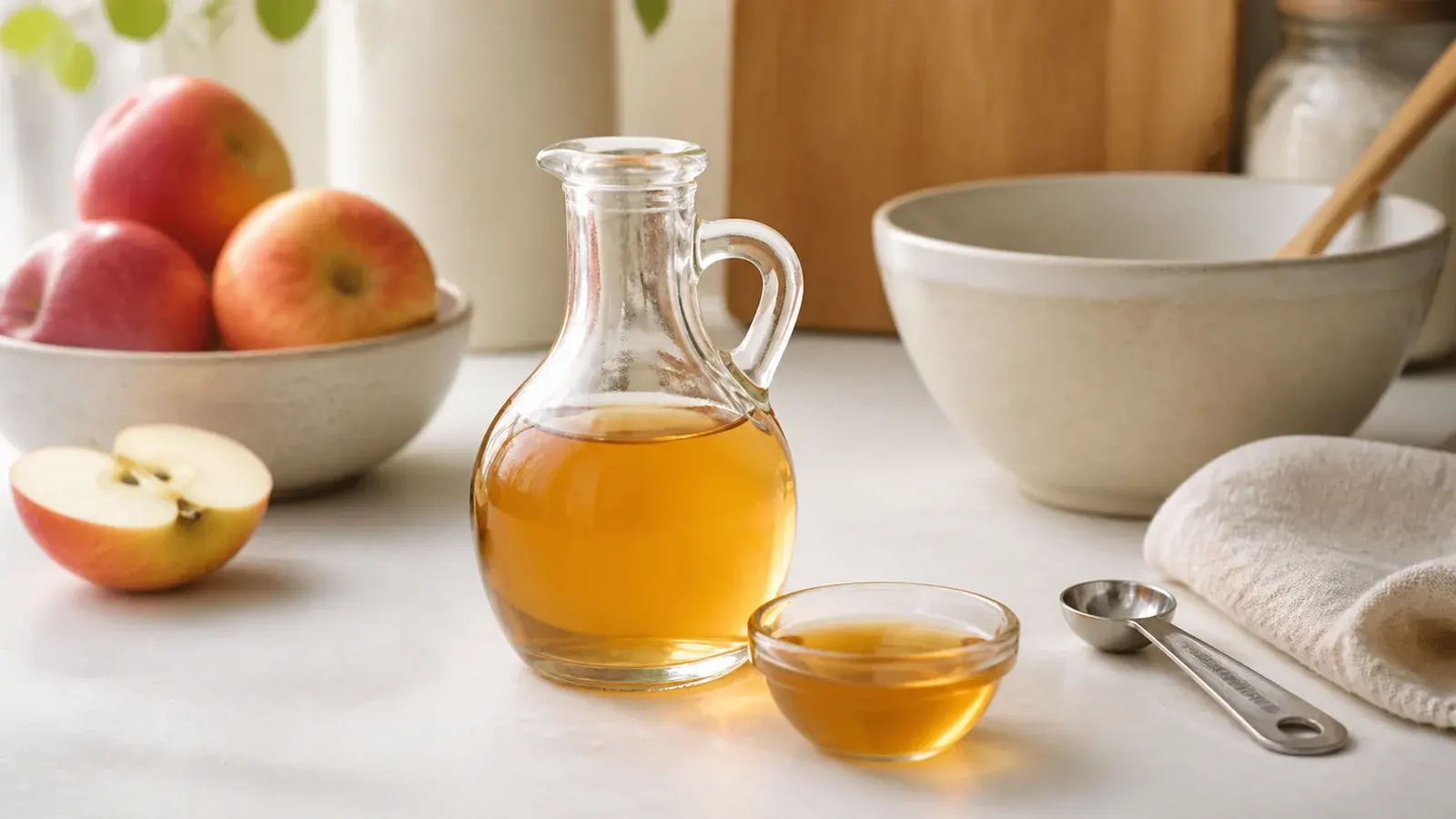
apple cider vinegar vegan baking
Apple Cider Vinegar for Baking
Apple cider vinegar (ACV) is produced by fermenting crushed apples — first into hard cider (alcohol), then through a second fermentation into vinegar (acetic acid). Raw, unfiltered apple cider vinegar retains the "mother" — a hazy mixture of acetic acid bacteria, cellulose, and proteins — which is why it looks cloudy in the bottle. For baking purposes, the filtered (clear) and unfiltered versions perform identically; the "mother" contributes no relevant functional difference in baked goods. In GF baking specifically, ACV serves a role that is often overlooked: GF doughs and batters tend to be slightly alkaline due to the composition of GF flour blends and leavening agents. A small amount of acid balances the pH, which has two important effects. First, it prevents the purplish-gray discoloration that can occur with certain GF ingredients (notably psyllium husk) in alkaline conditions. Second, it produces a more tender, open crumb by optimizing the gelatinization of GF starches and preventing over-development of the protein network. ACV is also used in dairy-free "buttermilk": mixing plant-based milk with a teaspoon of ACV produces a curdled, acidic liquid that mimics the tenderizing effects of traditional buttermilk in pancakes, muffins, and quick breads.
What is it?
Apple cider vinegar is a fermented fruit vinegar — primarily acetic acid (about 5% by volume) in water, with trace malic acid, small amounts of residual sugars, and naturally occurring B vitamins in raw/unfiltered versions. It is naturally gluten-free (apples contain no gluten) and very low in calories. From a baking chemistry perspective, ACV is an acid with a pH of approximately 3–3.5, making it effective at: 1. Reacting with baking soda (sodium bicarbonate) to produce CO₂ leavening 2. Lowering overall batter pH for improved texture and color in GF baking 3. Denaturing proteins in dairy-free milks to create a buttermilk-substitute
How to use
Activating baking soda: - Add ½–1 teaspoon ACV per teaspoon of baking soda in a recipe for an additional leavening boost. - ACV should be added with liquid ingredients; it reacts with baking soda immediately upon contact, so bake promptly after mixing. General GF baking: - Quick breads, muffins, cakes: Add 1 teaspoon of ACV per cup of GF flour blend. This is the standard baseline for most GF recipes. - GF sandwich bread: 1–2 teaspoons per loaf improves rise and crumb structure. - Pancakes and waffles: 1 teaspoon per batch improves lift. Vegan buttermilk (dairy-free): - Add 1 tablespoon ACV to 1 cup of plant-based milk (oat, almond, soy). Stir gently and let sit for 5 minutes until curdled. Use in place of regular buttermilk. Flavor note: At amounts up to 2 teaspoons per recipe, ACV bakes out almost completely — there is no detectable vinegar flavor in finished baked goods.
Substitutes
| Substitute | Ratio | Notes |
|---|---|---|
| White wine vinegar | 1:1 | Milder flavor; functionally identical |
| Lemon juice | 1:1 | Adds slight citrus note; works as well |
| Lime juice | 1:1 | Slightly stronger citrus note than lemon |
| White distilled vinegar | 1:1 | Sharp flavor; functionally identical; use slightly less if tasting |
| Cream of tartar | 1 tsp per 2 tsp ACV | Dry acid; excellent in dry ingredient blends |
Safety notes
⚠️ Dental Enamel Erosion: Undiluted apple cider vinegar is highly acidic and can erode tooth enamel and irritate the esophagus if consumed frequently in undiluted form. This is relevant to the wellness trend of drinking raw ACV as a health supplement — not to its use in baking, where it is thoroughly diluted and cooked. Do not drink straight ACV without diluting it. ⚠️ Gluten Cross-contamination: Apple cider vinegar is naturally gluten-free. Some malt vinegars (made from barley) do contain gluten and must be avoided by celiacs — but ACV is never malt-based. Standard ACV is safe. For extra caution, choose certified GF labeled products, though this is rarely necessary with ACV. ⚠️ Medication Interactions: Apple cider vinegar can interact with certain medications, including diuretics, laxatives, and diabetes medications (it can lower blood sugar). Baking quantities are minimal and unlikely to cause clinical effects, but those taking these medications and consuming large amounts of ACV as a supplement should discuss with their physician. ⚠️ Acid Sensitivity / GERD: People with gastroesophageal reflux disease (GERD) or acid sensitivity who consume large amounts of ACV as a supplement may experience worsened symptoms. In baking quantities (1–2 teaspoons per recipe), this is generally not an issue. ⚠️ "The Mother" Is Not Medically Significant in Baking: Raw ACV with "the mother" is heavily marketed for health benefits. In baking applications, there is no functional or health difference between filtered and unfiltered ACV — use whatever you have.
Where to buy
- Mainstream grocery: Universally available in all supermarkets in the condiment and vinegar aisle - Health food stores: Whole Foods Market, Sprouts (US); Holland & Barrett, Waitrose (UK) for organic/raw varieties - Online (US): iHerb, Amazon, Bragg (the most iconic ACV brand), Trader Joe's - Online (UK): Amazon UK, Biona Organic, Aspall (UK-produced ACV) Bragg Organic Raw Apple Cider Vinegar is the most widely recognized brand in the US; Aspall and Biona are trusted UK options.
Some product links may be affiliate links when a valid partner ID is configured. Always verify ingredients and labels before buying.
Storage
Store in a cool, dark cupboard. ACV has an extremely long shelf life — 5 years or more — due to its high acidity, which acts as a natural preservative. No refrigeration is needed. The "mother" in raw ACV may produce additional sediment or stringy strands over time — this is harmless; shake before use. ACV does not spoil in the conventional sense, though very old ACV may lose some flavor potency.
FAQ
How much apple cider vinegar should I add to GF baking?
For most GF baked goods, 1 teaspoon of ACV per cup of GF flour blend is a reliable starting point. For breads, use 1–2 teaspoons per loaf. In recipes that already include buttermilk or another acidic ingredient, reduce or omit the ACV. The key is not over-acidifying — too much ACV can impart a slight sour flavor or cause the batter to over-react with leaveners.
Will my baked goods taste like vinegar?
At normal baking quantities (1–2 teaspoons per recipe), the ACV completely bakes out and there is no detectable vinegar flavor in the finished product. The acetic acid volatilizes during baking. If you are concerned, start with ½ teaspoon and taste the baked result before increasing.
What is the difference between regular white vinegar and apple cider vinegar for baking?
Functionally, they are essentially identical in baking — both are acidic and will activate baking soda and tenderize baked goods at the same pH. ACV has a very slightly softer, fruity acidity compared to the sharper taste of white distilled vinegar. Both bake out at normal quantities. Use whichever you have on hand.
Can I use ACV to make dairy-free buttermilk?
Yes — this is one of its most useful baking applications. Add 1 tablespoon of ACV to 1 cup of plant-based milk (oat, almond, soy, or coconut milk all work). Stir briefly and allow to sit for 3–5 minutes. The milk will curdle slightly and become acidic, mimicking the tenderizing effects of dairy buttermilk in pancakes, muffins, and quick breads.
Is apple cider vinegar the same as malt vinegar?
No — these are completely different products. Malt vinegar is made from malted barley and contains gluten; it must be avoided by people with celiac disease. Apple cider vinegar is made from fermented apples and is naturally gluten-free. Never substitute malt vinegar for ACV in GF cooking.