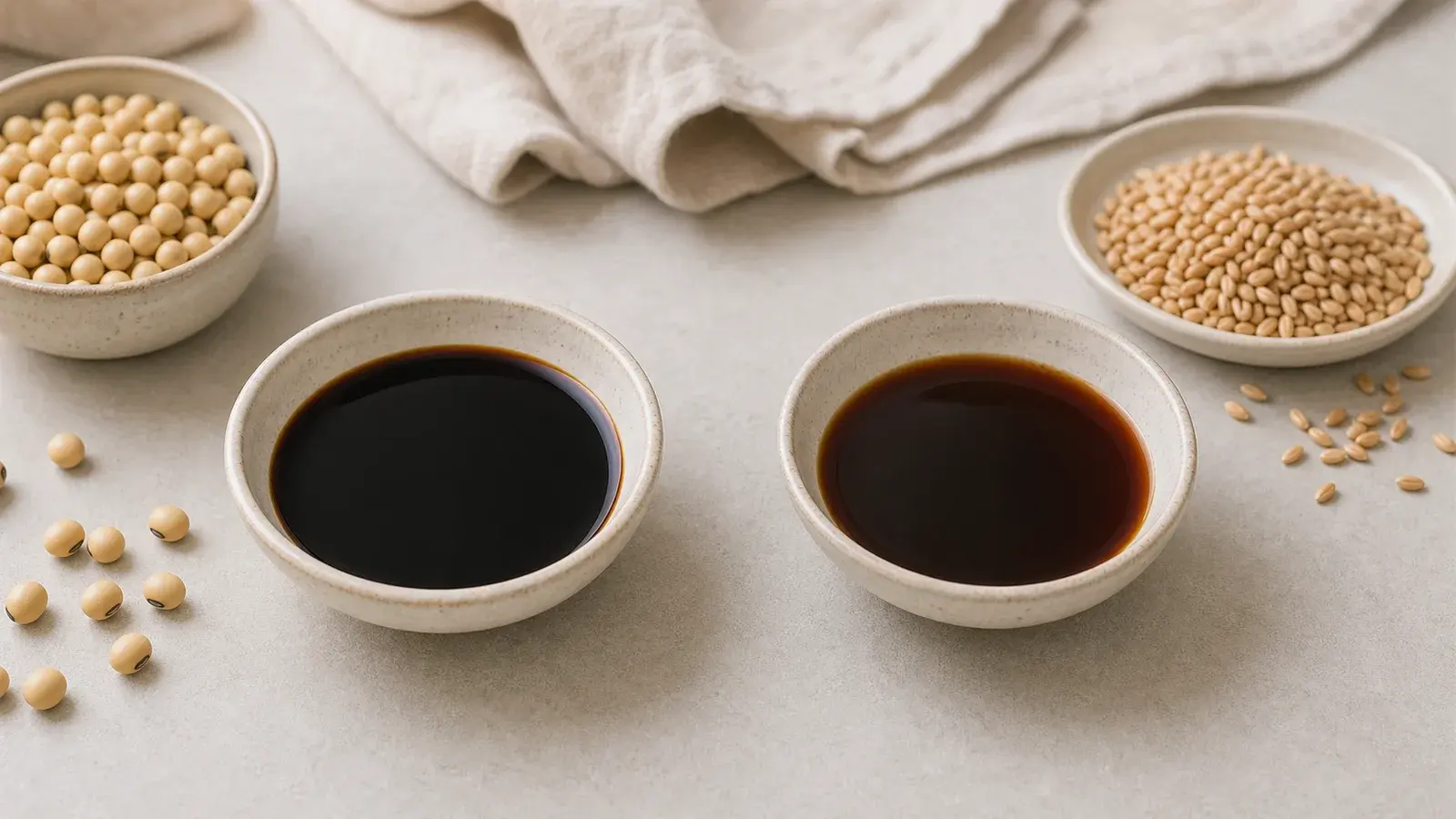
tamari vs soy sauce gluten free
Tamari vs Soy Sauce: Which Is Safe for Celiacs?
Tamari vs soy sauce — learn the key differences, which is gluten-free, and what celiacs must check before buying. Practical guide with safety tips.
For anyone managing celiac disease or gluten sensitivity, a bottle of soy sauce in a recipe can be a red flag. Tamari is often marketed as the gluten-free swap — but the reality is more nuanced than a simple one-for-one substitution. Understanding exactly what sets these two condiments apart can protect your health and improve your cooking.
Quick Comparison
| Property | Tamari | Regular Soy Sauce |
|---|---|---|
| Main ingredients | Soybeans, water, salt (minimal wheat) | Soybeans, wheat, water, salt |
| Gluten content | Usually very low or none | Contains gluten |
| Always gluten-free? | No — must check label | No |
| Flavor profile | Richer, deeper, less salty | Saltier, slightly thinner |
| Best use | Dipping, marinades, GF cooking | General Asian cooking |
| Certified GF options | Yes (San-J, Kikkoman GF) | Rarely |
What Is Soy Sauce?
Traditional soy sauce is made by fermenting a mixture of soybeans and roasted wheat, along with water and salt. The wheat plays a functional role: it contributes to the fermentation process and adds complexity to the flavor. The result is a salty, umami-rich liquid that has been central to East Asian cuisine for centuries.
Because wheat is a core ingredient, standard soy sauce — including most major brands like Kikkoman regular, Lee Kum Kee, and La Choy — contains gluten. Even small amounts can trigger a reaction in people with celiac disease. Just 1–2 teaspoons in a marinade is enough to contaminate an entire dish.
Some brands market "reduced sodium" or "lite" soy sauce, but unless the label explicitly states gluten-free, these products still contain wheat.
What Is Tamari?
Tamari originated in Japan as a byproduct of miso paste production. Traditionally, it was made with little or no wheat, relying almost entirely on soybeans for its fermentation base. This gives tamari a richer, slightly thicker, and more complex flavor compared to regular soy sauce — many chefs prefer it specifically for dipping sauces and glazes.
Because of its low-wheat heritage, tamari became the natural go-to for gluten-free cooking. However — and this is critical — not all tamari is gluten-free. Some manufacturers add a small amount of wheat to their tamari during production. Unless the label reads "certified gluten-free," you cannot assume it is safe for celiac disease.
Reliable Gluten-Free Tamari Brands
- San-J Organic Tamari — certified gluten-free, widely available
- Kikkoman Gluten-Free Soy Sauce — labeled GF, uses a wheat-free brewing process
- Coconut Secret Coconut Aminos — soy-free and gluten-free alternative (different flavor profile)
When to Use Each
Use tamari (certified GF) when:
- Following a gluten-free recipe that calls for soy sauce
- Making dipping sauces, sushi accompaniments, or glazes where depth of flavor matters
- Cooking for anyone with celiac disease or gluten sensitivity
Regular soy sauce is suitable when:
- No gluten restrictions are present in your household
- You want maximum saltiness in a stir-fry or fried rice
For 1:1 substitution: replace soy sauce with an equal amount of certified GF tamari. The flavor is slightly richer, so some cooks reduce the amount by about 10–15% in delicate dishes.
⚠️ Safety Notes for Celiacs and Allergy Sufferers
- Not all tamari is gluten-free. Always look for a certified gluten-free (GF) symbol on the packaging — a "wheat-free" claim is not the same as gluten-free.
- Cross-contamination risk: Tamari produced in facilities that also handle wheat may be contaminated even if the recipe is wheat-free. Look for dedicated GF facility certifications when possible.
- Hidden soy sauce: Restaurant dishes — especially Asian takeaways, teriyaki sauces, and marinades — frequently contain regular soy sauce. Always ask before ordering.
- Soy allergy: Both tamari and soy sauce contain soy and are not safe for people with a soy allergy. Consider coconut aminos as a soy-free and gluten-free alternative.
- Always consult your doctor or dietitian before making changes to your diet if you have celiac disease or a confirmed food allergy.
Where to Buy
- Amazon US: Shop certified GF tamari on Amazon
- Amazon UK: Shop certified GF tamari on Amazon UK
- iHerb: Browse tamari and coconut aminos on iHerb
Conclusion
Regular soy sauce is not safe for celiacs — it contains wheat as a standard ingredient. Tamari can be a safe alternative, but only when it is certified gluten-free. Look for brands like San-J or Kikkoman GF, check for cross-contamination warnings, and when in doubt, coconut aminos provide a completely soy-free and gluten-free option with a milder, slightly sweeter flavor.
Frequently Asked Questions
Q: Is all tamari gluten-free? No. While tamari traditionally contains little or no wheat, some brands still include small amounts of wheat in their recipe. You must look for a certified gluten-free label on the bottle. Do not assume tamari is safe without checking.
Q: Can celiacs use regular soy sauce? No. Standard soy sauce is brewed with wheat and contains gluten. Even a small amount can cause intestinal damage in someone with celiac disease. Always use a certified gluten-free tamari or a coconut aminos alternative.
Q: What is the best gluten-free substitute for soy sauce? Certified gluten-free tamari (such as San-J) is the closest in flavor to soy sauce. If you also need a soy-free option, coconut aminos is an excellent alternative — it's slightly sweeter and milder, but works well in most recipes.
Q: Does tamari taste different from soy sauce? Yes. Tamari has a richer, deeper umami flavor and is slightly less salty than regular soy sauce. It's also a bit thicker. Most people find it preferable for dipping sauces and marinades; the difference in stir-fries is subtle.
Q: How much tamari equals one tablespoon of soy sauce? Use a 1:1 ratio as your starting point. Because tamari is slightly richer, you may want to reduce by about 10–15% in recipes where a delicate flavor balance matters. In most everyday cooking, the difference is negligible.