gluten-free oat flour baking
Gluten-Free Oat Flour
Oats (Avena sativa) are intrinsically complicated for the GF community. Oats themselves do not naturally contain the same gluten proteins (gliadin and glutenin) as wheat, barley, and rye — technically, oats contain a related protein called avenin. However, conventional oats are almost universally contaminated with wheat, barley, or rye through co-cultivation, shared farm equipment, shared storage, and shared milling — making ordinary oat flour completely unsafe for coeliac disease or significant gluten sensitivity. Certified gluten-free oats are produced using one of two methods: purity protocol (oats grown in dedicated GF fields, harvested with dedicated equipment, and processed in dedicated GF facilities) or optical sorting (high-tech sorting machines that detect and remove contaminating grains at the processing stage). The most rigorous standard for coeliac safety is purity protocol, which is why these oats command a higher price. Beyond safety, GF oat flour is a genuinely excellent baking ingredient — mild, slightly sweet, with a creamy texture that creates tender, moist baked goods. It is one of the most human-tasting GF flours, with an approachable, familiar flavour that works across pancakes, muffins, cookies, and quick breads.
What is it?
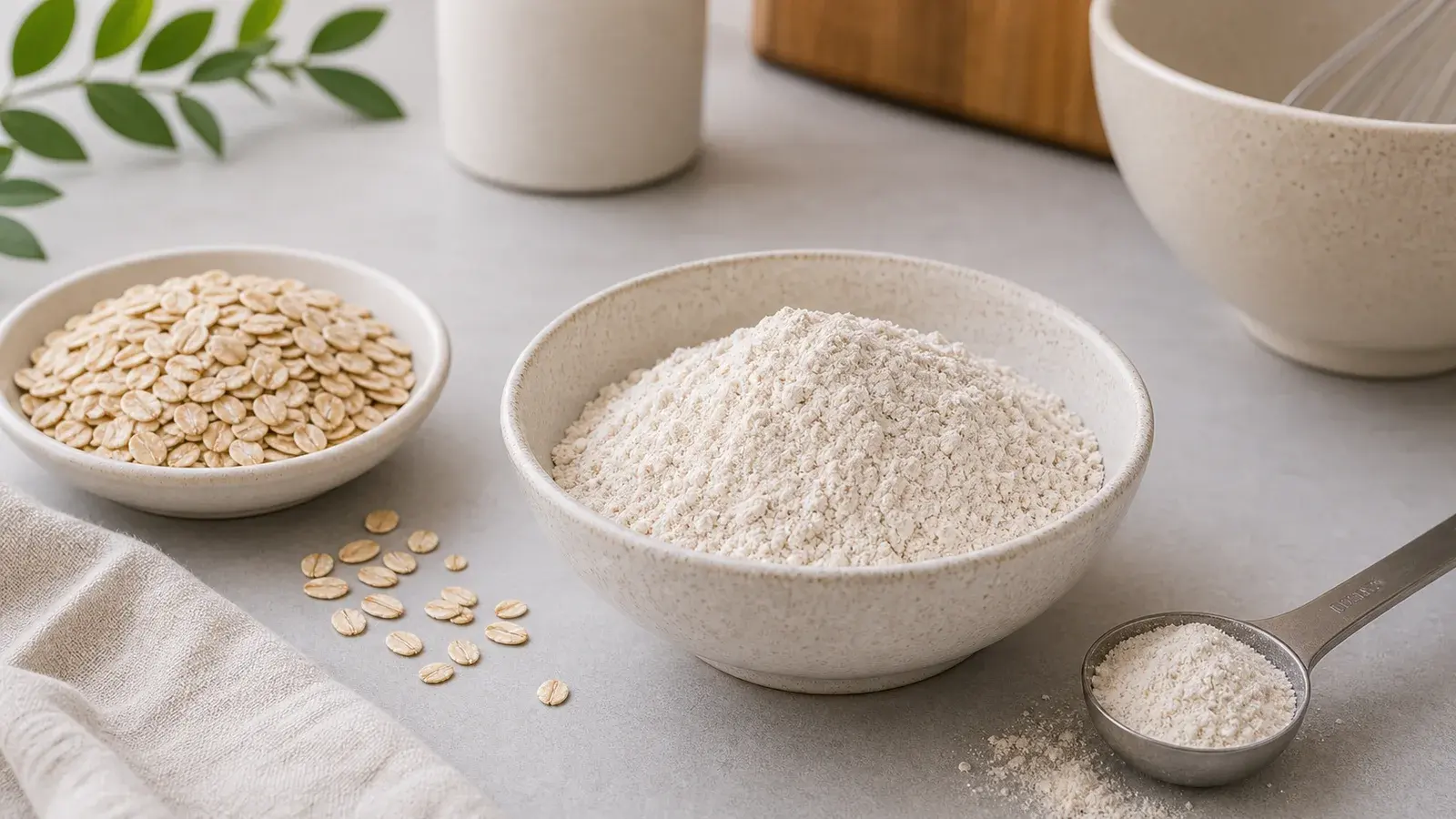
Gluten-free oat flour is made by finely grinding certified gluten-free whole rolled oats or steel-cut oats into a soft, pale flour. It retains the nutritional benefits of whole oats: beta-glucan (a soluble fibre strongly associated with cholesterol-lowering and blood sugar regulation), protein (about 13% by weight), iron, zinc, magnesium, and B vitamins. The beta-glucan content is a particular advantage — it gives GF oat flour a moistening, binding quality not found in most GF flours, slightly reducing the need for additional binders. Oat flour can also be easily made at home by blending certified GF rolled oats in a blender or food processor until fine.
How to use
- In GF flour blends: Replace 25–50% of your GF flour blend with oat flour for improved flavour, nutrition, and moisture retention. - Pancakes and waffles: Oat flour pancakes are outstanding — light, fluffy, and flavourful. Use up to 100% oat flour for single-grain pancakes. - Muffins and quick breads: Use 50–75% oat flour in a blend with tapioca starch; results are moist and hold together well. - Cookies: Works beautifully at 100% in most cookie recipes due to its binding properties (oat cookies are a classic). - Binder: Reduce xanthan gum by up to half when using oat flour in a blend — beta-glucan provides natural binding. - Homemade: Blend certified GF rolled oats in a blender for 30–60 seconds. Use immediately or store as you would purchased oat flour. - Density note: Oat flour produces denser, moister baked goods than white rice flour. For lighter cakes, blend with tapioca starch.
Substitutes
| Substitute | Ratio | Notes |
|---|---|---|
| Sorghum flour | 1:1 | Similar nutritional profile; slightly heartier flavour |
| Brown rice flour | 1:1 | Less flavourful; more gritty; still nutritious |
| Millet flour | 1:1 | Mild, slightly sweet; similar light colour |
| Teff flour | 1:1 | Earthier, darker; stronger flavour |
| Buckwheat flour | 1:1 | Much stronger flavour; use at max 30–40% |
Safety notes
⚠️ CRITICAL — Coeliac Disease & Oat Sensitivity: Oat flour is ONLY safe for coeliac disease if it carries a certified gluten-free label from a purity protocol or validated optical-sorting facility. Regular oats and regular oat flour are almost always contaminated with wheat gluten and must be avoided. Do not use conventional, "naturally gluten-free," or "might be GF" oat flour — certification is non-negotiable. ⚠️ Avenin Sensitivity — A Subset of Coeliac Patients: Even certified gluten-free oats are not tolerated by all people with coeliac disease. Approximately 1–5% of coeliac patients react to avenin, a protein in oats that is structurally similar to gluten. If you have coeliac disease and have never consumed oats before, introduce certified GF oat flour slowly and monitor for symptoms. Consider testing for avenin sensitivity with your gastroenterologist. ⚠️ Not Appropriate for Oat Allergy: Oat allergy (distinct from gluten sensitivity) does exist. People with an oat allergy must avoid oat flour entirely regardless of GF certification. ⚠️ Brand Matters: Not all "gluten-free" oat labels meet the same standard. Brands with the strongest coeliac safety reputation include Bob's Red Mill (purity protocol), GF Harvest, and Quaker Gluten Free (optical sorting, though not purity protocol). For the most sensitive coeliac patients, purity protocol oats are recommended. UK label check (Food Standards Agency): Oats appear in the UK cereals-containing-gluten allergen category. For a gluten-free diet, use oat flour specifically labelled gluten-free and check any precautionary statement. Read the full pack every time and assess cross-contact according to your own needs; no label wording is a medical guarantee.
Where to buy
UK buying guide: Search for “gluten-free oat flour”. Check the free-from or home-baking sections of major UK supermarkets such as Tesco, Sainsbury's, Waitrose, Morrisons and Ocado. Less common flours and binders may be easier to find through specialist retailers such as Holland & Barrett, Planet Organic, Grape Tree or Real Foods; relevant South Asian or East Asian food shops may use a different product name. Availability and formulations change. Before buying, read the complete ingredients list, any emphasised allergens and any specific ‘may contain’ statement; do not rely on an old pack or a retailer category alone.
Some product links may be affiliate links when a valid partner ID is configured. Always verify ingredients and labels before buying.
Storage
Store in an airtight container in a cool, dry place for up to 3 months at room temperature, or refrigerate for up to 6 months. Oat flour's natural oils (from the oat bran) can go rancid faster than refined starches — refrigeration is recommended once opened. Freeze for up to 12 months. Homemade oat flour should be used within 1–2 weeks or frozen.
FAQ
Are oats really gluten-free?
Oats do not naturally contain the same gluten proteins as wheat. However, conventional oats are nearly always contaminated with wheat during growing, harvesting, or processing. For coeliac-safe use, oats must be certified gluten-free (purity protocol or validated optical sorting). Always buy certified — never assume plain oats are safe.
What is purity protocol oats?
Purity protocol is the highest standard for GF oat production. It means oats are grown on dedicated GF fields that have not grown wheat, barley, or rye within a specified period; harvested with dedicated GF equipment; transported in dedicated containers; and milled in dedicated GF facilities. This minimises all cross-contamination risk, unlike optical sorting which removes contaminating grains after the fact.
Can I make oat flour at home?
Yes — blend certified GF rolled oats in a high-powered blender or food processor for 30–60 seconds until fine. Sift if needed. This is one of the easiest and most cost-effective GF flours to make at home, as certified GF rolled oats are more widely available (and sometimes cheaper) than pre-made oat flour.
Can all celiacs eat certified GF oat flour?
Most can, but not all. Approximately 1–5% of coeliac patients also react to avenin, the oat protein. Coeliac organizations in Canada, the UK, and Australia advise that celiacs should discuss oat introduction with their gastroenterologist before adding oats to their diet, even when certified GF. Start slowly and monitor for GI or systemic symptoms.
Does gluten-free oat flour taste like regular oats?
Yes — GF oat flour has the same mild, slightly sweet, creamy oat flavour that makes oatmeal and oat-based baked goods so universally appealing. It is one of the most familiar and palatable GF flours, which is a significant advantage when cooking for mixed GF and non-GF households.