coconut flour gluten-free baking
Coconut Flour
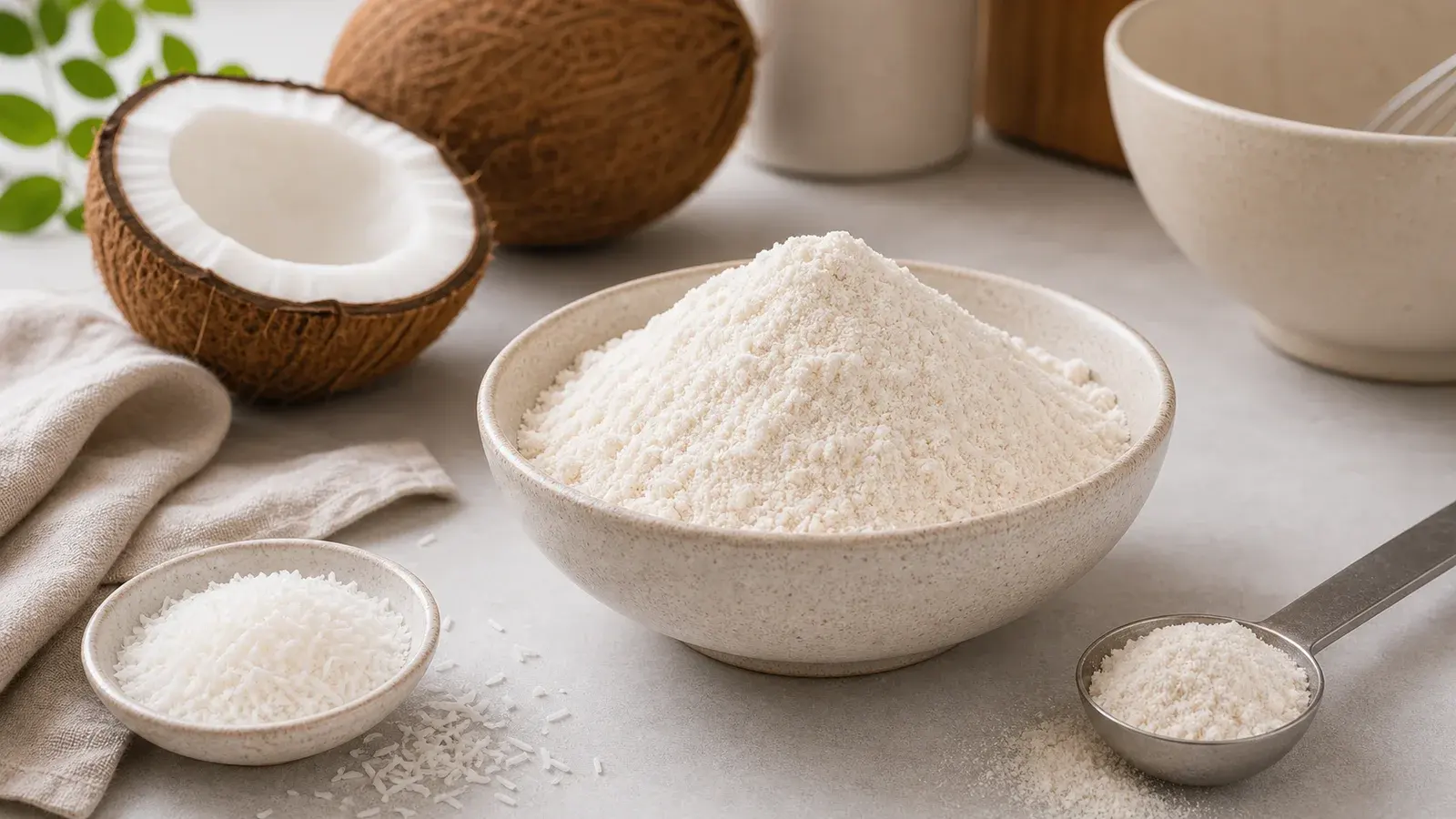
Coconut flour is made from dried coconut meat (the white flesh of mature coconuts) that has been defatted — most of the coconut oil has been pressed out — and then finely milled into a soft, ivory-coloured powder. This process leaves behind a flour that is extraordinarily high in dietary fibre (around 40% by weight) and relatively low in digestible carbohydrates compared with grain-based GF flours. Unlike most flours, coconut flour is not interchangeable on a 1:1 basis with anything. Its extreme absorbency — it soaks up liquid like a sponge, far more than rice flour, tapioca starch, or even almond flour — means recipes must be specifically formulated or carefully adapted for it. A common guideline is to use only ¼–⅓ cup of coconut flour where 1 cup of another flour is called for, and to significantly increase the number of eggs and liquid. This absorbency comes from the massive fibre content. Coconut flour is Paleo, grain-free, gluten-free, and nut-free, making it one of the few flours that works across multiple dietary restriction frameworks simultaneously — though it does contain tree nut–adjacent proteins and is not safe for tree nut allergy sufferers in some jurisdictions.
What is it?
Coconut flour is the defatted, dried, and milled flesh of mature coconuts. It is naturally gluten-free, grain-free, and relatively high in protein (about 19% by dry weight) compared with starch-based GF flours. Its standout quality is fibre: approximately 10–12 grams of dietary fibre per 2-tablespoon serving, much of it insoluble. This gives coconut flour a very low net carbohydrate count and makes it popular in low-carb and ketogenic diets. The mild, sweet coconut flavour is present but generally subtle enough not to overwhelm most baked goods — though it is noticeable in lightly flavoured recipes like plain crackers or unflavored bread. In recipes with strong flavours (chocolate, banana, citrus, spices), the coconut note essentially disappears.
How to use
Coconut flour requires a completely different approach from other flours: - Flour replacement ratio: Use ¼–⅓ cup coconut flour for every 1 cup of all-purpose or rice flour called for. Using more will produce dry, crumbly, inedible results. - Eggs are critical: Coconut flour needs many eggs for binding and moisture. Expect 1 egg per 2 tablespoons of coconut flour as a baseline. - Extra liquid: Add 1 tablespoon of extra liquid (water, milk, or plant-based milk) per tablespoon of coconut flour above the standard amount. - Rest the batter: Let batter or dough sit for 2–5 minutes after mixing — coconut flour continues absorbing liquid during this time and the consistency will firm up. - Best applications: Pancakes, muffins, banana bread, dense cakes, cookies, and flatbreads. Less suited to light, airy cakes. - Blending: Many bakers blend coconut flour (15–25%) with almond flour for a balanced texture, reducing the need for excess eggs.
Substitutes
| Substitute | Ratio | Notes |
|---|---|---|
| Almond flour | 1 cup almond for ¼ cup coconut + reduce eggs by 1–2 | Richer, moister; different texture; increase for volume |
| Cassava flour | 3:1 (¾ cup cassava per ¼ cup coconut) | Adjust liquid and eggs; more neutral flavour |
| Oat flour (certified GF) | 3:1 | Adjust eggs; lighter texture; not grain-free |
| Tigernut flour | 1:1 | Also grain-free; slightly sweeter; adjust liquid |
| Sorghum flour | 3:1 | Adjust liquid and eggs; earthy flavour |
Safety notes
⚠️ Coconut Allergy / Tree Nut Classification: Coconut is classified as a tree nut by the FDA in the United States, though it is botanically a fruit. Some individuals with tree nut allergies react to coconut; others do not. If you have a tree nut allergy, consult your allergist before consuming coconut flour. In the UK and EU, coconut is not classified as one of the 14 major allergens requiring mandatory labelling, but cross-reactivity is possible. ⚠️ High Fibre Content: The very high fibre content of coconut flour can cause digestive discomfort — bloating, gas, and changes in bowel habits — if consumed in large amounts by those not accustomed to high-fibre diets. Introduce gradually and ensure adequate hydration. ⚠️ Cross-contamination: Coconut flour is naturally gluten-free, but always purchase certified GF versions for coeliac safety. Some manufacturers process multiple flour types in shared equipment. ⚠️ Not Suitable for Low-Fat Diets Without Recipe Adjustment: While coconut flour itself is relatively low in fat (fat was removed in processing), recipes formulated for it often call for significant quantities of eggs, coconut oil, or other fats to achieve acceptable texture. UK label check (Food Standards Agency): Coconut is not one of the 14 allergens that UK law requires to be emphasised, although an individual coconut allergy can still be serious. Read the full pack every time and assess cross-contact according to your own needs; no label wording is a medical guarantee.
Where to buy
UK buying guide: Search for “coconut flour”. Check the free-from or home-baking sections of major UK supermarkets such as Tesco, Sainsbury's, Waitrose, Morrisons and Ocado. Less common flours and binders may be easier to find through specialist retailers such as Holland & Barrett, Planet Organic, Grape Tree or Real Foods; relevant South Asian or East Asian food shops may use a different product name. Availability and formulations change. Before buying, read the complete ingredients list, any emphasised allergens and any specific ‘may contain’ statement; do not rely on an old pack or a retailer category alone.
Some product links may be affiliate links when a valid partner ID is configured. Always verify ingredients and labels before buying.
Storage
Store coconut flour in an airtight container in a cool, dark place. Shelf life is 6–12 months at room temperature. Refrigerate after opening for up to 12 months. Freeze for up to 2 years. Coconut flour can absorb odours from other foods, so keep sealed tightly. If it develops a rancid or off smell, discard.
FAQ
Why is my coconut flour baking so dry?
Coconut flour's extraordinary absorbency is the most common cause of failed recipes. If you are adapting a non-coconut-flour recipe, you likely used too much flour or not enough liquid and eggs. Use only ¼ cup of coconut flour where 1 cup of regular flour is called for, and add extra eggs and liquid. Recipes specifically written for coconut flour will have these adjustments built in.
Can I substitute coconut flour for almond flour?
Not 1:1 — coconut flour is far more absorbent and requires a different ratio of wet ingredients. To substitute ¼ cup coconut flour, use approximately 1 cup almond flour and reduce the eggs called for in the original recipe. Results will differ in texture and flavour.
Is coconut flour safe for nut allergies?
Coconut is classified as a tree nut by the FDA, but many people with tree nut allergies can tolerate coconut without issue. This varies by individual. Anyone with a diagnosed tree nut allergy should consult their allergist before consuming coconut flour.
Is coconut flour good for keto and low-carb diets?
Yes. Coconut flour has a very high fibre content and relatively low net carbohydrates, making it popular in ketogenic and low-carb diets. A 2-tablespoon serving typically contains about 8g total carbohydrates with 5g fibre, yielding around 3g net carbs — significantly lower than most grain-based flours.
How do I keep coconut flour from making baked goods too dense?
The key is the correct ratio of eggs and leavening. Use eggs generously (they provide structure and lift), incorporate adequate baking powder or soda, let the batter rest briefly so the flour absorbs the liquid before baking, and avoid over-mixing. Blending coconut flour with a starchier GF flour also produces a lighter result.