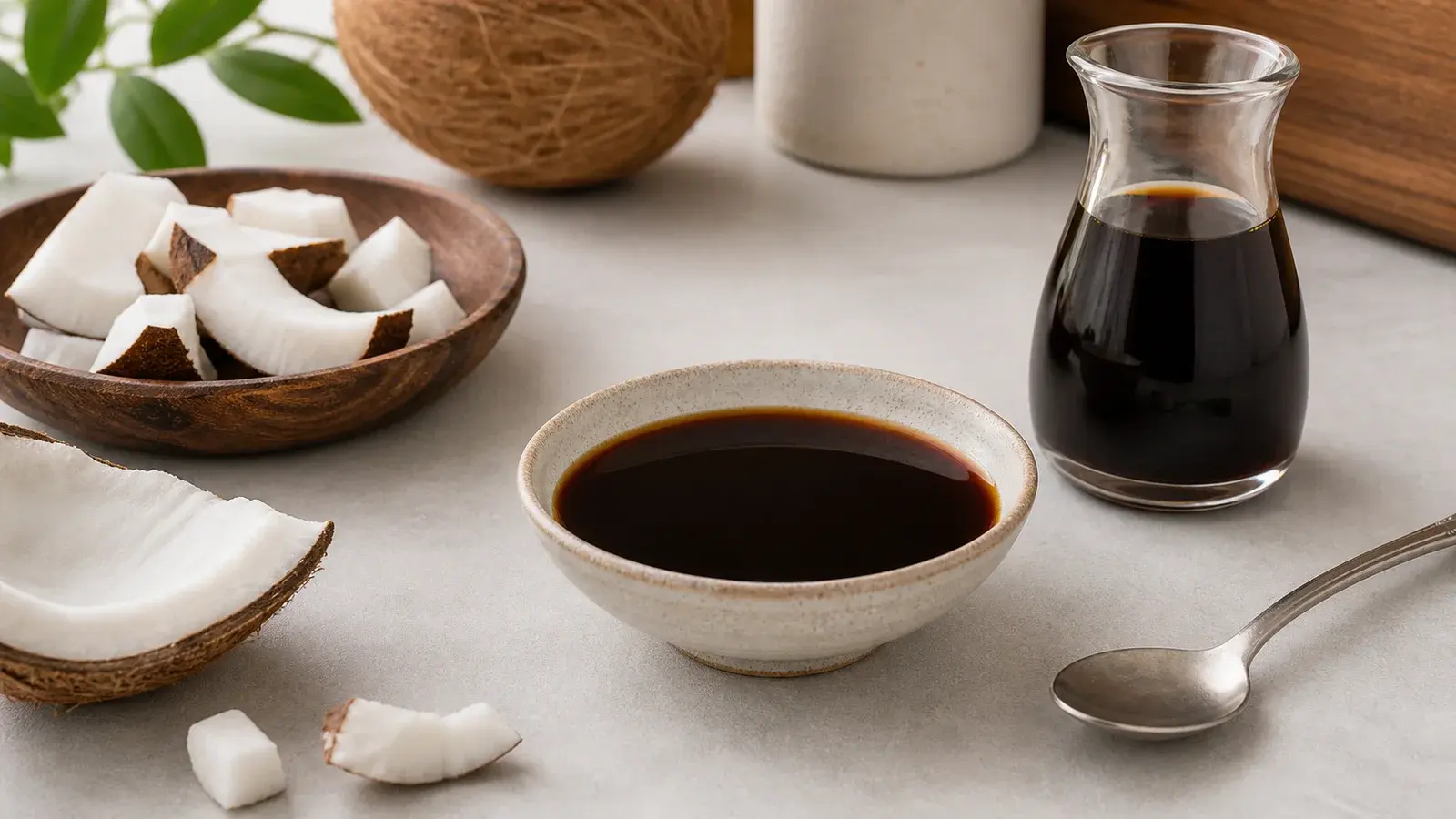
coconut aminos soya-free
Coconut Aminos
Coconut aminos is produced from the sap (nectar) of coconut palm blossoms. The nectar is harvested, combined with sea salt, and fermented — typically for several months — to develop its characteristic savoury, slightly sweet, umami-rich flavour. The result is a dark, pourable liquid that looks similar to light soya sauce and performs similarly in most cooking applications. The name "aminos" refers to the amino acids naturally present in the fermented coconut sap — not a synthetic addition. The fermentation process breaks down proteins into free amino acids, contributing to the condiment's savoury, mouth-coating quality. It contains 17 naturally occurring amino acids. Coconut aminos is lower in sodium than conventional soya sauce (approximately 270–480 mg per teaspoon vs. ~1000 mg in standard soya sauce), which makes it a useful lower-sodium option for those monitoring salt intake. It is slightly sweeter and milder than soya sauce, which may require small recipe adjustments.
What is it?
Coconut aminos is a condiment and flavouring sauce made from fermented coconut palm sap and sea salt. It is: - Naturally gluten-free - Soya-free - Grain-free - Vegan - Paleo-friendly - Lower in sodium than conventional soya sauce Its flavour profile is savoury and umami-forward with a hint of natural sweetness — very close to light soya sauce but slightly less salty and slightly sweeter. In most recipes it is interchangeable with soya sauce or tamari at a 1:1 ratio, though some cooks add a small pinch of salt to compensate for the lower sodium content.
How to use
Coconut aminos can replace soya sauce or tamari in virtually any application: - Stir-fries and sautées: Use 1:1 in place of soya sauce or tamari. - Marinades: Excellent base for meat, tofu, or tempeh marinades; the slight sweetness caramelises well. - Salad dressings: Use in Asian-inspired dressings as you would soya sauce. - Dipping sauces: Works beautifully in GF dumpling dipping sauces, spring roll dips, and sushi accompaniments. - Fried rice and noodles: Add a splash at the end of cooking for savoury depth. - Glazes: The natural sugars in coconut aminos caramelise well under high heat, producing beautiful glazed proteins. - Sodium compensation: If your dish tastes flat when using coconut aminos in place of soya sauce, add a small pinch of sea salt or increase the coconut aminos by 10–20%.
Substitutes
| Substitute | Ratio | Notes |
|---|---|---|
| Tamari (GF-certified) | 1:1 | Soya-based; excellent GF soya sauce alternative; saltier |
| GF soya sauce | 1:1 | Contains soya; saltier; less sweet |
| Liquid aminos (Bragg's) | 1:1 | Soya-based; unfermented; different flavour profile |
| Fish sauce (GF) | Use ½ the amount | Much more pungent; adds seafood note; not vegan |
| Worcestershire (GF, vegan) | 1:1 | Different flavour profile; more complex; often contains anchovy |
Safety notes
⚠️ Soya Allergy Users — Verify Manufacturing: Coconut aminos is soya-free by ingredient, but some production facilities also handle soya sauce and tamari. If you have a soya allergy, check manufacturer statements about shared facility/equipment allergen risk, particularly for severe soya allergy or anaphylaxis history. ⚠️ Gluten Cross-contamination: Coconut aminos is naturally gluten-free, but always verify the product carries a certified GF label. Some facilities produce multiple sauces including wheat-containing products. Brands like Coconut Secret and Bragg consistently produce certified GF coconut aminos. ⚠️ Sodium Content: While lower in sodium than regular soya sauce, coconut aminos still contains meaningful sodium (270–480 mg per teaspoon depending on brand). Those on a medically supervised low-sodium diet should count this toward their daily sodium budget. ⚠️ Tree Nut Considerations: Coconut is classified as a tree nut by the FDA. However, most people with tree nut allergies tolerate coconut without issue. If you have a tree nut allergy, consult your allergist before using coconut aminos, though allergic reactions to coconut products in this context are uncommon. ⚠️ Sugar Content: Coconut aminos contains naturally occurring sugars from the coconut sap (approximately 1–2g per teaspoon). This is minimal in cooking quantities but relevant for very strict low-sugar or low-carb diets. UK label check (Food Standards Agency): Soya is one of the 14 regulated UK allergens. Coconut aminos is not automatically suitable for a soya allergy: check the complete ingredients list and any precautionary statement on each pack. Read the full pack every time and assess cross-contact according to your own needs; no label wording is a medical guarantee.
Where to buy
UK buying guide: Search for “coconut aminos”. Check the free-from or home-baking sections of major UK supermarkets such as Tesco, Sainsbury's, Waitrose, Morrisons and Ocado. Less common flours and binders may be easier to find through specialist retailers such as Holland & Barrett, Planet Organic, Grape Tree or Real Foods; relevant South Asian or East Asian food shops may use a different product name. Availability and formulations change. Before buying, read the complete ingredients list, any emphasised allergens and any specific ‘may contain’ statement; do not rely on an old pack or a retailer category alone.
Some product links may be affiliate links when a valid partner ID is configured. Always verify ingredients and labels before buying.
Storage
Coconut aminos has a long shelf life — 2–3 years unopened, stored in a cool, dark cupboard. Once opened, refrigerate and use within 3–6 months for best quality. Some brands do not require refrigeration after opening (check label), but refrigeration always extends shelf life and freshness. A small amount of sediment at the bottom is normal and does not indicate spoilage — shake before using.
FAQ
Does coconut aminos taste exactly like soya sauce?
Very close, but not identical. Coconut aminos is slightly sweeter and milder, with a less sharp, saltier edge than soya sauce. Most people cannot distinguish it in finished dishes, especially in stir-fries, marinades, and sauces where many other flavours are present. In applications where soya sauce flavour is prominent (like a simple soya dipping sauce), the sweetness of coconut aminos is more noticeable.
Can I use coconut aminos in sushi?
Yes — coconut aminos can be used as a dipping sauce for sushi and sashimi. It produces a slightly sweeter dip than regular soya sauce or tamari; many people enjoy it, and it is the go-to option for guests with soya and gluten restrictions.
Is coconut aminos low in sodium?
It is lower in sodium than regular soya sauce — roughly 270–480 mg per teaspoon compared to approximately 1000 mg in standard soya sauce. However, this varies by brand, so check the nutrition label. It is not "low sodium" in an absolute sense — it still contributes meaningful salt to dishes.
Is coconut aminos the same as coconut vinegar?
No. Coconut aminos and coconut vinegar are both made from coconut sap but undergo different fermentation processes. Coconut aminos is a savoury, umami-rich condiment similar to soya sauce. Coconut vinegar is acidic and sharp, used similarly to apple cider vinegar. They are not interchangeable.
What is the difference between coconut aminos and tamari?
Both are popular gluten-free soya sauce alternatives, but they differ in composition: tamari is made from fermented soya beans (like soya sauce, but with less or no wheat) and has a more robust, salty, savoury flavour. Coconut aminos is soya-free, made from fermented coconut sap, and is slightly sweeter and milder. Tamari is the better choice for those who want the closest match to regular soya sauce; coconut aminos is essential for those avoiding both gluten AND soya.